


Which Used Vehicle Type Fits Your Driving Needs?
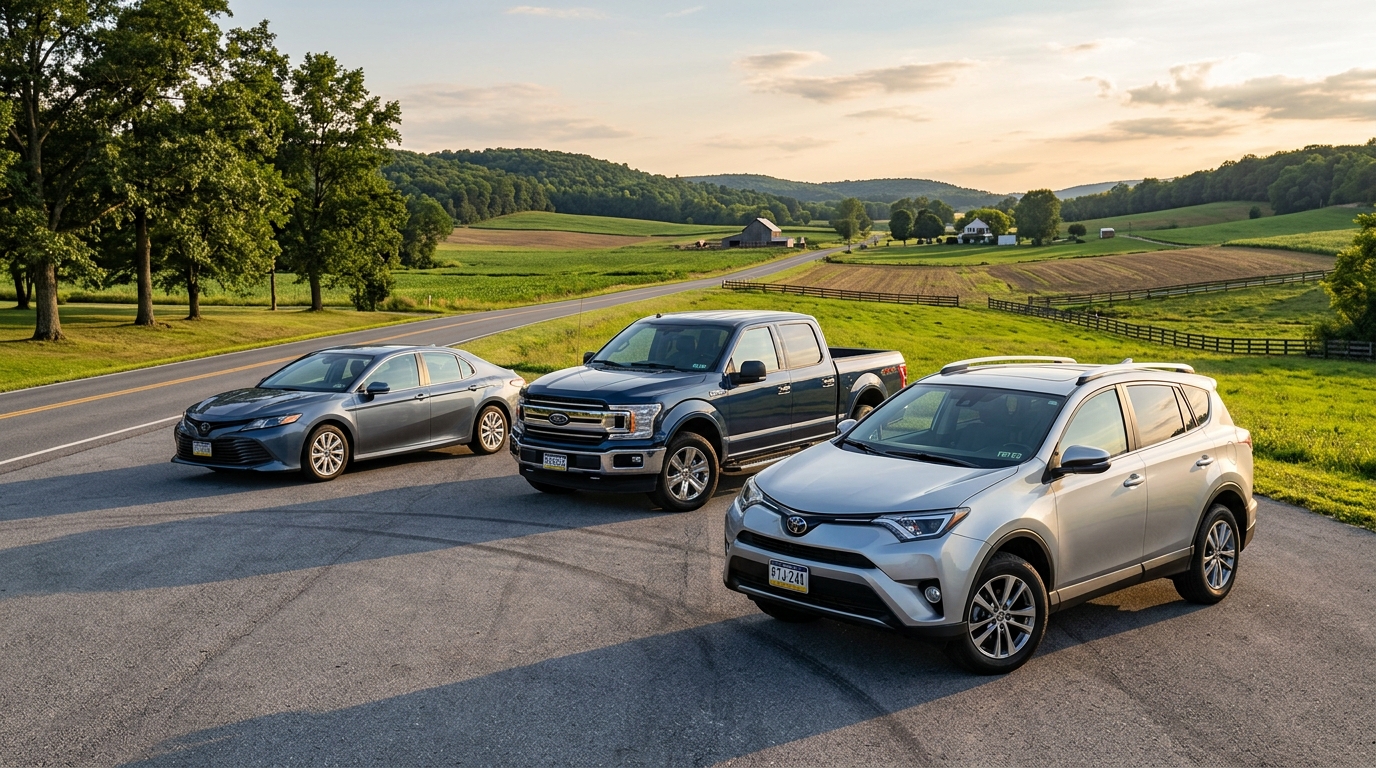
Selecting the right used vehicle depends on balancing daily passenger space, cargo requirements, fuel economy, and towing demands. All-wheel drive (AWD) crossovers offer versatile cabin space and winter traction for families, full-size 4WD pickup trucks provide heavy-duty hauling and towing power, while hybrid sedans deliver maximum fuel efficiency for daily commuters. Matching vehicle capabilities to your routine ensures long-term utility and value.
Determining the ideal body style begins with an honest evaluation of how you use your vehicle every day. Compact and midsize crossovers provide flexible seating configurations, elevated ride height, and efficient power output, making them a popular default choice for drivers managing daily carpools or weekend getaways. Vehicles equipped with intelligent AWD systems monitor wheel slip continuously, distributing power to the axles with the most traction without requiring manual driver intervention.
For buyers who regularly haul heavy cargo, pull utility trailers, or require maximum durability, a full-size pickup truck remains the most capable option. Modern trucks feature advanced boxed steel frames, high-torque engine configurations, and specialized suspension setups engineered to handle heavy payloads in the truck bed alongside substantial trailering loads. While trucks consume more fuel than smaller body styles, their chassis strength and towing ratings cannot be replicated by unibody crossovers.
Sedans and hatchbacks excel for drivers prioritizing low cost of ownership, agile handling, and maximum highway mileage. Pre-owned hybrid sedans utilize electric motor assistance to relieve engine load during acceleration, achieving outstanding fuel economy figures that lower weekly commuting expenses. To explore our current selection of pre-owned cars, crossovers, and trucks, visit our Waynesboro showroom or give our sales team a quick call at (833) 669-0849 to discuss available inventory.
Table of Contents
- What Is the Best Way to Shop for a Used Car Locally and Verify Its Condition?
- Is a Certified Pre-Owned Vehicle Better Than a Standard Used Car?
- How Does Fuel Economy Compare Between AWD Crossovers, 4WD Trucks, and Hybrid Sedans?
- Which Used Truck Models and Towing Equipment Handle Heavy Hauling in Franklin County?
- What Factors Drive Used Car Prices and PA Safety Inspection Requirements?
- Quick Answers to Common Pre-Owned Buying Questions in Waynesboro
- Drive Home Your Ideal Used Vehicle at Buchanan Automotive Chevrolet Today
What Is the Best Way to Shop for a Used Car Locally and Verify Its Condition?
The best way to shop for a used car locally is to research vehicle history reports for accident and ownership records, confirm comprehensive mechanical inspection results, and perform a thorough test drive across varied road conditions. Evaluating trade-in opportunities and comparing pre-owned pricing against new models helps secure the highest return on your vehicle investment.
A structured shopping process prevents impulse decisions and ensures long-term satisfaction. Begin by reviewing a vehicle history report to verify title status, service intervals, and reported accident histories. A clean vehicle history report with documented maintenance records indicates that a vehicle received consistent care from previous owners.
Families and commuters test-driving pre-owned inventory on local roads usually request to review the vehicle history report—checking for clean titles and single-owner history—before walking through the multi-point mechanical inspection checklist on the showroom floor. During the physical walk-around and test drive, evaluate critical operational components:
- Check tire tread depth and inspect for uneven wear patterns that indicate alignment or suspension issues.
- Test all electronic systems, including touchscreens, climate control, power windows, and driver-assist safety sensors.
- Listen for unusual engine, brake, or exhaust noises during cold starts, acceleration, and firm braking stops.
- Verify smooth transmission gear transitions across both low-speed neighborhood driving and highway acceleration.
Comparing pre-owned pricing against our new vehicle inventory provides helpful context on feature availability and overall market value. Additionally, utilizing our online trade-in valuation tool allows you to establish an accurate equity baseline for your current vehicle, lowering your overall purchase balance before finalizing finance terms.
Is a Certified Pre-Owned Vehicle Better Than a Standard Used Car?
A certified pre-owned (CPO) vehicle is better than a standard used car for buyers seeking factory-backed warranty coverage, rigorous multi-point mechanical inspections, and strict vehicle age and mileage limits. While standard pre-owned vehicles are typically sold with limited dealer coverage or as-is, CPO models deliver manufacturer-backed protection similar to new vehicles.
To qualify for CPO status, a vehicle must satisfy stringent factory requirements regarding age, odometer mileage, and title history. Factory-trained technicians subject each prospective vehicle to an exhaustive 172-point inspection covering mechanical systems, body integrity, powertrain performance, and interior condition. Any component that fails to meet strict factory reconditioning standards is repaired or replaced with genuine original equipment manufacturer parts before certification is granted.
| Feature Comparison | Certified Pre-Owned (CPO) | Standard Used Vehicle |
|---|---|---|
| Inspection Standard | 172-Point Factory Inspection | Multi-Point Dealer Check |
| Powertrain Warranty | 6-year/100,000-mile powertrain limited warranty | Balance of Original or Optional |
| Bumper-to-Bumper Warranty | 12-month/12,000-mile bumper-to-bumper limited warranty | Limited or As-Is Coverage |
| Vehicle History Report | Standard Included | Standard Included |
| Roadside Assistance | Included During Warranty Period | Optional Add-On |
Choosing between certified and standard pre-owned inventory depends on your budget and desired level of coverage. Standard used vehicles often carry lower initial price tags, making them ideal for budget-conscious shoppers. However, CPO models provide long-term peace of mind that offsets potential future repair costs. You can browse our complete pre-owned vehicle inventory or filter specifically for factory-backed protection on our certified pre-owned inventory page.
How Does Fuel Economy Compare Between AWD Crossovers, 4WD Trucks, and Hybrid Sedans?
Used hybrid sedans deliver the highest efficiency at 45 to 53 mpg combined, AWD crossovers typically achieve 24 to 30 mpg combined, and full-size 4WD pickup trucks average 17 to 22 mpg combined. Understanding these mechanical and efficiency differences allows buyers to balance daily fuel costs against vehicle passenger and cargo capability.
Fuel economy variation stems directly from vehicle weight, engine displacement, aerodynamic drag, and drivetrain design. Hybrid sedans combine a gasoline engine with electric motor propulsion and regenerative braking, capturing kinetic energy during deceleration to recharge the onboard battery. This setup dramatically cuts fuel consumption during stop-and-go driving. Drivers traveling through the rolling farmland terrain of Greencastle benefit significantly from hybrid regenerative braking on hilly routes, lowering routine fuel expenditures compared to traditional gas engines.
Crossovers strike a practical balance between efficiency and all-weather traction. Modern AWD crossovers operate primarily in front-wheel drive under normal road conditions to conserve fuel, engaging rear-wheel power only when sensors detect front-wheel slippage. This automatic disconnect technology minimizes driveline drag during highway cruising while maintaining winter weather security.
Full-size 4WD trucks prioritize torque output, towing durability, and off-road traction over raw efficiency. Traditional 4WD systems feature mechanical transfer cases that lock power distribution between front and rear axles. Because trucks carry heavier curb weights, boxier aerodynamic profiles, and larger V6 or V8 engines, their fuel consumption is higher across both city and highway cycles.
Which Used Truck Models and Towing Equipment Handle Heavy Hauling in Franklin County?
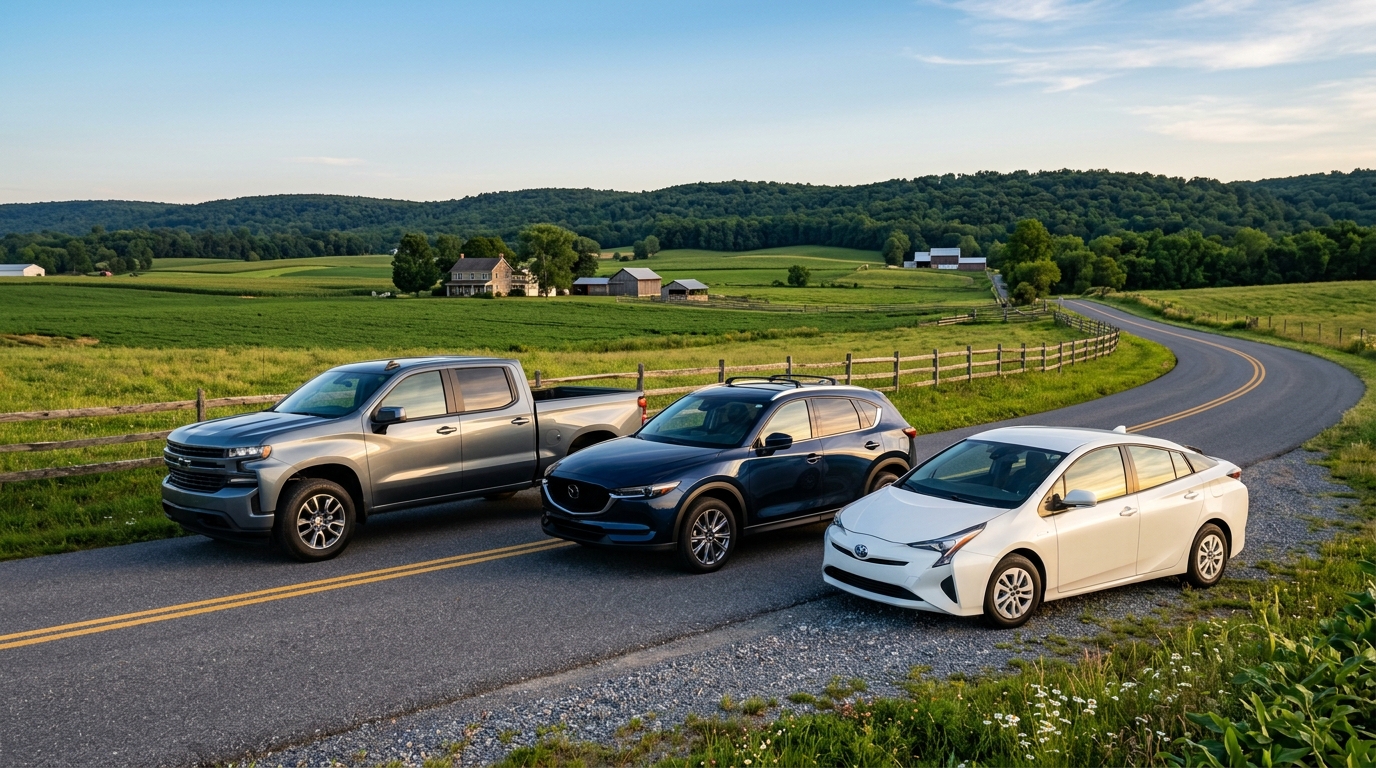
Used full-size pickups like the Chevrolet Silverado 1500 and GMC Sierra 1500 deliver towing capacities ranging from 9,000 to over 13,000 lb when equipped with a Class IV hitch receiver, integrated trailer brake controller, heavy-duty cooling package, and 7-pin wiring harness. Securing the correct factory trailering hardware ensures safe, legal, and stable hauling performance.
Understanding vehicle weight ratings is critical when matching a pre-owned truck to your trailering demands. Gross Vehicle Weight Rating (GVWR) dictates the maximum allowable weight of the truck itself, including passengers, cargo, and trailer tongue weight. Gross Combined Weight Rating (GCWR) establishes the maximum combined limit for the fully loaded truck and attached trailer together. Never exceed the lowest-rated component in your towing system.
Essential trailering equipment for heavy hauling includes:
- Class IV hitch receiver: Rated to handle heavy tongue weights and trailer loads exceeding 10,000 lb when properly configured.
- Integrated trailer brake controller: Synchronizes the truck’s braking system with electric trailer brakes for smooth, controlled stops under heavy loads.
- Heavy-duty cooling package: Upgraded engine oil and transmission fluid coolers prevent mechanical overheating during steep highway climbs or extended hauling.
- 7-pin wiring harness: Supplies electrical power for trailer lights, turn signals, reverse lights, and electric brake actuation.
- Towing mirrors and trailer sway control: Expanded side visibility and electronic stability intervention prevent trailer oscillation in high winds.
Choosing a pre-owned truck equipped with factory trailering packages ensures that frame reinforcements, axle ratios, and transmission shift calibration are already optimized for heavy workloads straight off the lot.
What Factors Drive Used Car Prices and PA Safety Inspection Requirements?
Used car prices are primarily driven by vehicle mileage, overall mechanical and body condition, trim level, and history report status, while Pennsylvania requires all registered pre-owned vehicles to pass an annual safety inspection verifying brakes, tires, suspension, steering, lighting, and glass.
Market pricing for pre-owned vehicles reflects real-time supply and demand alongside physical vehicle condition. Lower-mileage vehicles command premium pricing because they retain more remaining service life on major powertrain components. High-value equipment like leather seating, advanced infotainment displays, active safety packages, and four-wheel drive systems also increase resale value across similar model years. Regional market demand along the interstate corridor near Hagerstown keeps high-demand commuter sedans and family SUVs competitively priced, while localized reconditioning standards ensure vehicles satisfy state inspection rules before delivery.
Before any pre-owned vehicle can be registered and driven legally on Pennsylvania roads, it must pass a mandatory annual state safety inspection. Key inspection components include:
- Braking systems: Minimum brake pad friction material thickness and rotor surface integrity.
- Tires and wheels: Minimum tread depth of 2/32-inch without exposed cord, bulges, or sidewall damage.
- Suspension and steering: Tight steering linkages, functional shock absorbers, and intact ball joints.
- Lighting and glass: Uncracked windshields within the wiper sweep area, functional headlights, tail lights, brake lights, and turn signals.
- Body and frame: Structural frame integrity free from rust perforation or severe collision damage.
Purchasing a vehicle that has already undergone comprehensive dealer reconditioning guarantees that all state inspection criteria are fully satisfied before you drive home.
Quick Answers to Common Pre-Owned Buying Questions in Waynesboro
Q: Do hybrid vehicles cost more to maintain than conventional gasoline cars?
Routine maintenance costs for hybrid vehicles are comparable to—and sometimes lower than—conventional gasoline cars. While hybrids feature complex electric powertrains, their internal combustion engines experience less operational wear thanks to electric motor assistance. Additionally, regenerative braking systems reduce wear on traditional brake pads and rotors, extending service replacement intervals. Standard maintenance items like cabin air filters, tire rotations, and fluid checks follow typical schedule intervals, providing predictable long-term ownership costs.
Q: Should I have an independent mechanic inspect a pre-owned vehicle before buying?
Requesting an independent pre-purchase inspection is a practical step for buyers purchasing standard used vehicles without factory coverage. An independent technician provides an objective evaluation of mechanical components, frame condition, brake wear, and hidden fluid leaks. However, when purchasing a factory CPO vehicle from our dealership, the vehicle has already passed a comprehensive 172-point mechanical and safety inspection performed by factory-certified technicians, with all findings fully documented for your review.
Q: What paperwork should I bring when applying for pre-owned vehicle financing?
When preparing to complete an online auto credit application or finalize financing in person, gather your recent pay stubs or proof of income, a current utility bill for proof of residence, a valid driver’s license, and proof of auto insurance. Bringing complete documentation streamlines the underwriting review, speeds up approval timelines, and helps secure competitive interest rates tailored to your credit profile. You can start the pre-approval process anytime by submitting our secure online credit application.
Q: How does trading in my current vehicle affect my overall financing terms?
Trading in your current vehicle provides positive equity that functions as an immediate down payment toward your next purchase. Applying trade-in equity reduces the total loan amount financed, which lowers your monthly payment and decreases total interest charges paid over the loan term. Additionally, trading in a vehicle at the time of purchase reduces the taxable sale balance in many jurisdictions, offering further financial savings.
Q: What safety features should buyers prioritize when inspecting a used family SUV?
When evaluating a used family SUV, prioritize advanced driver-assistance features that enhance daily protection. Look for vehicles equipped with automatic emergency braking, forward collision warning, lane keep assist, blind-spot monitoring, and rear cross-traffic alert. A clear rearview camera or surround-view parking camera system is also essential for safe maneuvering in crowded parking lots and driveways.
Drive Home Your Ideal Used Vehicle at Buchanan Automotive Chevrolet Today
Finding the right pre-owned vehicle requires balancing performance capabilities, fuel efficiency, passenger comfort, and overall purchase value. Whether you need a fuel-efficient hybrid sedan, a versatile AWD family crossover, or a high-capacity 4WD pickup truck equipped for heavy towing, our team is dedicated to delivering a transparent, stress-free vehicle buying experience. Visit us in person at 1035 E Main St, Waynesboro, PA 17268 to test drive your top vehicle choices. You can also explore our cross-brand pre-owned selection through Buchanan GMC or contact our sales specialists directly by calling (833) 669-0849 to schedule your visit today.
Keep Your Vehicle Running Strong
Keep your vehicle performing at its best with our service team:
© 2026 Buchanan Automotive Chevrolet. All rights reserved.

0 comment(s) so far on Which Used Vehicle Type Fits Your Driving Needs?