


What Is the Smartest Way to Shop for a Used Car?
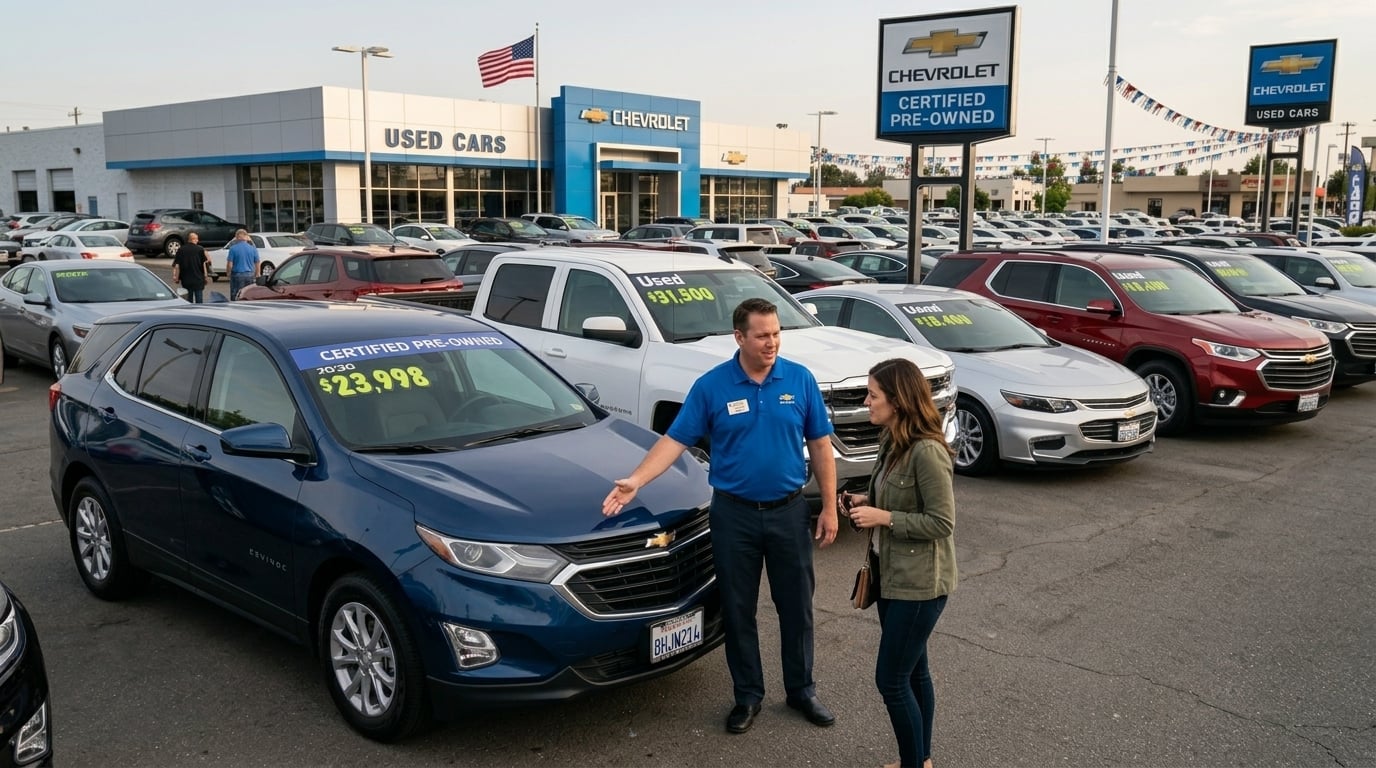
The smartest way to shop for a used car and compare value across several models is to calculate total baseline costs by balancing the listing price against vehicle history, mileage, and projected five-year ownership expenses rather than looking at price alone. Evaluating a vehicle requires running a history report to confirm clean title status, applying online pricing guides to establish fair local market value, and verifying that the drivetrain and safety components pass thorough inspection standards before committing to financing.
Navigating the pre-owned market requires a structured approach that separates high-value inventory from options that might cost more over time in hidden repairs. While a lower listing price on a high-mileage car may look attractive potential savings often disappear when factoring in accelerated component wear, higher financing interest rates, or missing safety features. Comparing vehicles side-by-side on equal footing means converting asking prices into total anticipated investment over a 60-month loan term or standard ownership period.
At Buchanan Automotive Chevrolet, our team helps local buyers organize their search by providing transparent pricing and verified vehicle details up front. To explore our available pre-owned trucks, SUVs, and sedans in person, you can easily view our showroom location in Waynesboro or speak directly with a specialist by giving us a quick call today. Establishing a clear set of comparison criteria before stepping onto the lot protects your budget and simplifies your decision.
Table of Contents
- Which Filters Are Most Useful When Searching Used Cars in Waynesboro?
- Which Online Pricing Guides Provide the Most Accurate Used Vehicle Values?
- When Should I Run a Vehicle History Report and What Red Flags Indicate Avoidance?
- What Inspection Standards Apply to Certified Pre-Owned Cars and PA Safety Checks?
- Why Is an Extended Test Drive Crucial for Evaluating Vehicle Performance?
- How Do Used Trucks, SUVs, and Sedans Compare in Total Cost of Ownership?
- Frequently Asked Questions About Shopping Used Vehicles
- Take the Next Step in Your Used Vehicle Search
Which Filters Are Most Useful When Searching Used Cars in Waynesboro?
The most useful online search filters for evaluating used vehicles are price range caps, total mileage, vehicle age, drivetrain configuration, estimated monthly payment, and fuel economy ratings. Setting an upper budget ceiling around $25,000 instantly eliminates out-of-reach options, while pairing model year with mileage filters isolates well-maintained vehicles that still have substantial operational life remaining. Filtering specifically for drivetrain options like 4WD or all-wheel drive ensures the vehicle can handle regional weather conditions and varied terrain.
When searching regional inventory, filtering by drivetrain is particularly critical for commuters navigating the rolling farmland and winter road conditions around Greencastle. A front-wheel-drive sedan might offer an attractive listing price, but a pickup or SUV equipped with four-wheel drive or an automatic locking rear differential delivers necessary traction during heavy snow or ice. Combining drivetrain filters with fuel efficiency ratings allows buyers to balance winter capability against daily commuting expenses.
Filtering by estimated financing payment and overall vehicle condition further streamlines the buying process. Utilizing digital shopping tools helps isolate cars that fit precise credit parameters before scheduling a physical walkaround. To start narrowing down suitable choices from home, shoppers can browse our current pre-owned inventory and submit information to prequalify for competitive auto financing before visiting the showroom.
Which Online Pricing Guides Provide the Most Accurate Used Vehicle Values?
The most accurate online pricing guides are those that synthesize actual retail and wholesale transaction data adjusted for local regional market trends, including resources like Kelley Blue Book, Edmunds True Market Value, and NADA Guides. These tools analyze millions of completed sales to generate distinct valuation tiers, distinguishing trade-in value from private-party pricing and dealer retail expectations. Relying on verified transaction databases prevents buyers from overpaying or misjudging trade-in allowances.
Understanding how pricing guides structure their ratings prevents common misunderstandings during price negotiations. Most valuation tools set their baseline estimates at a “clean” vehicle condition, which assumes minimal cosmetic blemishes, solid tire tread depth, and a complete mechanical maintenance record. Vehicles rated in “outstanding” condition represent roughly 5% of the overall market, meaning most well-maintained daily drivers fall accurately into clean or average brackets. Estimating a fair purchase price requires factoring in specific optional packages, engine choices like a turbocharged 4-cylinder versus a V6 engine, and overall mileage relative to vehicle age.
Pricing guides also serve as a vital benchmark when evaluating whether to trade in a current vehicle or purchase new versus pre-owned. Comparing a pre-owned vehicle’s retail estimate against comparable options on our new vehicle showroom floor illuminates whether initial depreciation savings outweigh new-car warranty benefits. Buyers planning to trade in their current ride can value their trade online to receive a clear estimate grounded in current market transaction data.
When Should I Run a Vehicle History Report and What Red Flags Indicate Avoidance?
A vehicle history report should be requested using the vehicle identification number before scheduling an in-person test drive or submitting a finance application. Reviewing official records early in the search process identifies critical title discrepancies, prior accident records, and irregular ownership histories before time is invested in physical evaluations. Major red flags that indicate a vehicle should be avoided include salvage or rebuilt title designations, structural frame damage logs, odometer rollback warnings, and unexplained gaps in state registration history.
A vehicle history report provides an objective timeline of how a car, truck, or SUV was driven and maintained by previous owners. Reports from trusted sources detail documented collision records, airbag deployments, total-loss insurance claims, and commercial fleet or rental usage history. Multiple owner transfers within a short calendar window often signal lingering mechanical issues that previous owners attempted to bypass rather than repair.
In addition to title status, checking maintenance entry intervals on the report confirms whether essential fluid changes and recall work were performed on schedule. Unreported accidents can sometimes be spotted by cross-referencing history gaps with physical clues during an inspection, such as inconsistent body panel gaps, oversprayed paint along fender edges, or damp carpeting in the trunk. Verifying history records up front protects buyers from inheriting unrecorded structural or electrical liabilities.
What Inspection Standards Apply to Certified Pre-Owned Cars and PA Safety Checks?
Certified Pre-Owned programs require vehicles to undergo a comprehensive factory-mandated inspection covering between 100 and 170 individual mechanical, safety, and cosmetic points performed by factory-trained technicians. To qualify for certification, vehicles must meet strict age and mileage thresholds, possess a clean title, and undergo complete reconditioning using genuine OEM replacement parts. Certified inventory comes backed by extended factory warranty coverage, such as a 6-year/100,000-mile powertrain limited warranty and a 12-month/12,000-mile bumper-to-bumper limited warranty.
Pennsylvania state safety inspections enforce a mandatory legal baseline that every registered vehicle must pass annually, regardless of certification status. Authorized state inspectors check critical operational components to ensure roadworthiness, including:
- Braking systems, measuring brake pad thickness and rotor condition
- Steering mechanisms and front-end suspension components
- Tire tread depth and wheel rim integrity
- Exterior lighting equipment, glass glazing, and windshield wiper operation
- Underbody structure, frame condition, and complete exhaust system integrity
While a standard state safety check verifies basic legal compliance, factory certification goes significantly further by inspecting luxury amenities, infotainment software, climate control output, and electronic driver-assist features. Choosing a factory-certified vehicle combines statutory safety compliance with extended warranty protection. Buyers looking for maximum long-term confidence can explore our certified pre-owned Chevrolet options to examine fully inspected, late-model trucks and SUVs.
Why Is an Extended Test Drive Crucial for Evaluating Vehicle Performance?
An extended test drive is crucial because brief neighborhood loops at low speeds fail to surface transmission hesitation, high-speed suspension vibrations, brake fade, or cabin noise issues that only appear during real-world driving conditions. Testing a vehicle across varied road surfaces and speeds reveals how the engine performs under firm acceleration, how the steering tracks along highway curves, and how comfortable the seating remains over time.
A thorough test drive sequence should cover highway acceleration lanes, hard braking stops in a safe area, tight turning radiuses in parking lots, and rough or uneven pavement. Pay close attention to automatic transmission shift points, checking for smooth gear transitions without clunking or slipping. Testing technology features like touchscreen responsiveness, blind-spot monitoring, adaptive cruise control, and climate control cooling and heating ensures all interior systems function properly before purchase.
Shoppers evaluating a truck or SUV on a test drive usually check cabin climate controls and perform firm highway braking along regional routes before reviewing the final paperwork. Bringing family members along during the drive helps confirm rear seat legroom, third-row accessibility, and cargo space for daily routines. Taking time to evaluate the vehicle completely guarantees the car fits your lifestyle without unpleasant surprises after delivery.
How Do Used Trucks, SUVs, and Sedans Compare in Total Cost of Ownership?
Comparing total cost of ownership across body styles requires calculating initial purchase price, annual fuel consumption, vehicle insurance premiums, routine tire and brake replacement costs, and projected overall depreciation. Compact sedans deliver the lowest upfront costs and superior fuel economy, making them economical commuting choices. Pickup trucks and full-size SUVs carry higher initial prices and fuel bills, but they compensate by retaining a higher percentage of their resale value over time.
Calculating a vehicle’s 5-year cost of ownership highlights how operational expenses accumulate based on vehicle class and annual mileage. Assuming a standard driving pattern of 15,000 miles per year, the financial performance across major vehicle categories breaks down as follows:
| Vehicle Class | Initial Purchase Cost | Fuel Economy & Expense | Maintenance & Tire Costs | Resale Value Retention |
|---|---|---|---|---|
| Sedans | Lower baseline | Superior (high MPG) | Lower replacement cost | Moderate depreciation |
| Mid-Size SUVs | Moderate baseline | Balanced (mid MPG) | Moderate replacement cost | Strong resale value |
| Full-Size Trucks | Higher baseline | Higher fuel demand | Higher tire & brake cost | Exceptional value retention |
Commuters driving daily routes into Hagerstown often find that sedan fuel savings balance out lower resale values, while truck owners benefit from sustained equity when trading in after several years. Evaluating your total annual mileage alongside regional driving needs reveals which vehicle type yields the lowest net cost per mile over your ownership horizon.
To discuss total ownership figures or inspect our current inventory choices in person, visit our Waynesboro dealership location or reach out to our team directly with a quick call to start your search.
Frequently Asked Questions About Shopping Used Vehicles
Q: How many miles per year is considered average for a used car?
The industry average annual driving distance is approximately 13,500 miles to 15,000 miles per year for most passenger vehicles. When evaluating a used vehicle, multiply its age in years by this baseline figure to determine whether it falls into a low-mileage or high-mileage category. A 4-year-old vehicle with around 50,000 miles represents average usage, whereas a vehicle exceeding 20,000 miles per year may reflect heavier highway wear that warrants closer mechanical scrutiny during inspection.
Q: How much does an independent pre-purchase inspection cost?
An independent pre-purchase inspection performed by a certified automotive technician typically costs between $100 and $250. This fee covers a comprehensive mechanical, electrical, structural, and undercarriage examination of the vehicle prior to purchase. Investing in a pre-purchase inspection provides an unbiased assessment of hidden wear items, such as weeping fluid seals, worn suspension bushings, or aging brake components, providing valuable leverage during pricing discussions.
Q: Can I negotiate the listing price on a Certified Pre-Owned vehicle?
Yes, asking prices on Certified Pre-Owned vehicles are open to negotiation based on local market conditions, vehicle age, inventory turnover, and trade-in considerations. While certified cars carry premium pricing to reflect extensive point-by-point inspections, OEM reconditioning, and extended factory warranty coverage, buyers can reference local market pricing guides to ensure the offered price aligns with fair retail valuations in the region.
Q: What is the difference between a dealer retail price and a private-party value?
Dealer retail price reflects the total purchase cost of a vehicle sold by a licensed dealership, including pre-sale safety reconditioning, vehicle history verifications, and dealership customer support services. Private-party value represents the estimated transaction price between two individuals selling a vehicle “as-is” without dealer reconditioning, warranty protections, or financing assistance, which generally results in a lower initial sale price balanced against higher buyer risk.
Q: How does loan length impact the total cost of buying a used car?
Extending a loan term reduces your monthly payment amount but increases the overall interest paid over the life of the loan. A 60-month loan balances manageable monthly payments with lower overall finance charges, whereas an extended 72-month or 84-month term increases interest costs and keeps you in an equity deficit longer as the vehicle continues to depreciate.
Take the Next Step in Your Used Vehicle Search
Finding the ideal pre-owned truck, SUV, or sedan comes down to combining smart search filters, reviewing verified vehicle history reports, and comparing total ownership costs against your long-term budget. At Buchanan Automotive Chevrolet, our team is committed to providing a transparent, straightforward buying experience backed by a diverse selection of quality pre-owned and factory-certified inventory.
To take the next step in your search, explore our online listings, evaluate your trade-in value online, or prequalify for financing from home. When you are ready for a hands-on walkaround and a comprehensive test drive, visit our showroom floor in Waynesboro or give our team a call to schedule an appointment with a sales specialist today.
Keep Your Vehicle Running Strong
Keep your vehicle performing at its best with our service team:
© 2026 Buchanan Automotive Chevrolet. All rights reserved.

0 comment(s) so far on What Is the Smartest Way to Shop for a Used Car?