


How We Help You Build Confidence When Trading in Your Vehicle
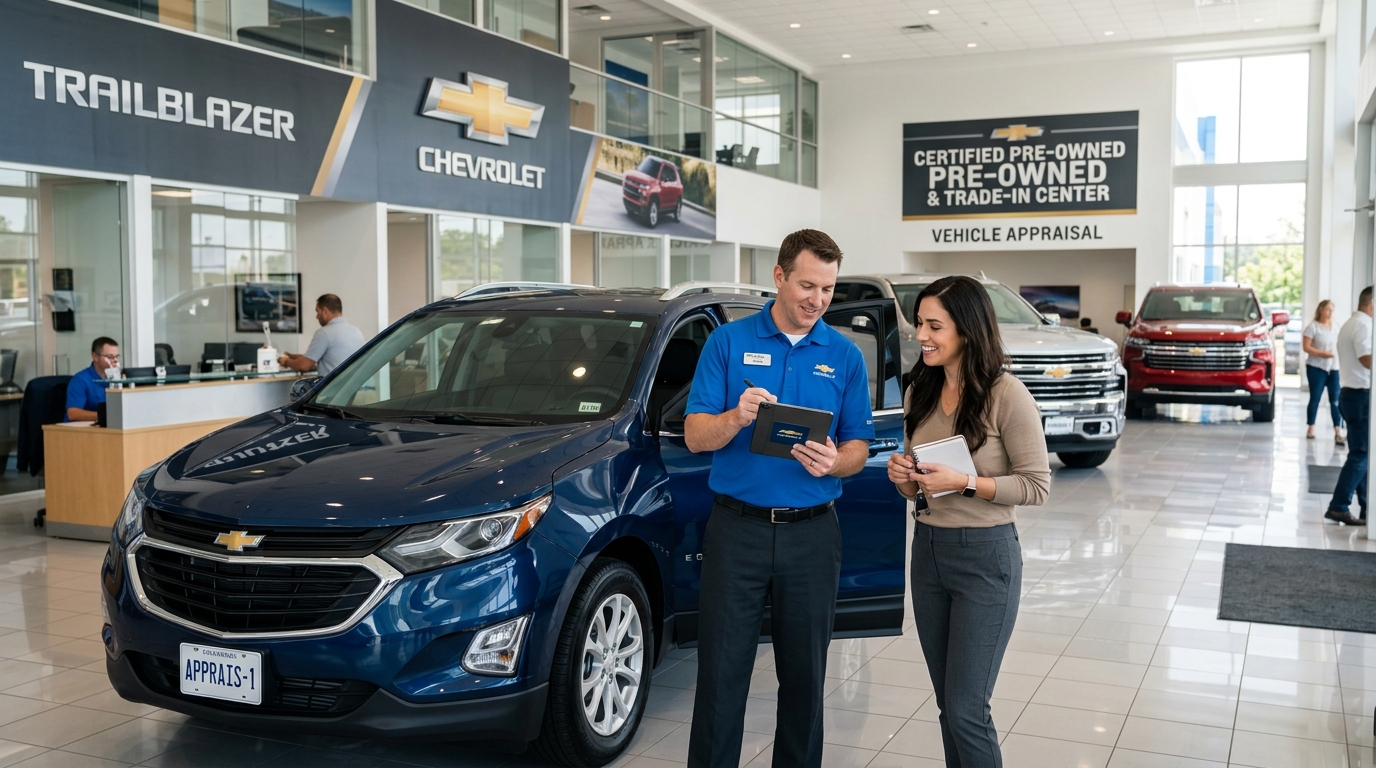
Upgrading to a different vehicle is a significant financial decision, and the process of parting with your current car should never feel like a guessing game. At Buchanan Automotive Chevrolet, our team focuses on providing a clear, transparent, and supportive environment for every customer who walks through our doors. Whether you are looking to transition into a brand-new truck or exploring high-quality pre-owned options, we are committed to making your trade-in experience straightforward and stress-free.
For drivers navigating the fertile farmland and rolling hills of Greencastle, having a dependable and capable vehicle is a daily necessity. When it is time to upgrade, trading in your current truck or SUV should be a seamless experience. We begin by conducting a comprehensive physical assessment of your vehicle, explaining each step of the evaluation so you understand exactly how we arrive at our offer. This collaborative approach ensures that you leave our dealership feeling confident in the value of your trade.
Our goal is to help you transition smoothly into your next vehicle, which is why we maintain an extensive selection of cars, trucks, and SUVs to fit a variety of lifestyles. You can explore our new Chevrolet inventory to find the latest models equipped with advanced safety and trailering technologies. Additionally, we offer diverse options from other brands, including new GMC models and a curated selection of used GMC options. If you prefer to discuss your options in person or want to schedule a physical appraisal, you can find our showroom address in Waynesboro or give our team a call directly at (833) 669-0849.
Table of Contents
- Understanding the Difference Between Trade-In, Private Party, and Retail Values
- The Crucial Vehicle Details and Condition Factors That Drive Your Appraisal
- How Regional Market Demand and Seasonality Shape Your Trade-In Offer
- Navigating Negative Equity and the Risks of Rolling Over Car Loans
- Your Trade-In Checklist: Required Documents and Pre-Appraisal Steps
- Answers to Common Questions About Trading in Your Vehicle
- Take the Next Step Toward Your Next Vehicle
Understanding the Difference Between Trade-In, Private Party, and Retail Values
When researching what your vehicle is worth, you will likely encounter several different figures online, which can easily lead to confusion. Trade-in value represents the wholesale acquisition price a dealership is willing to pay for your vehicle. This figure is fundamentally based on what comparable vehicles are bringing at regional dealer-to-dealer transactions and wholesale auctions. Because the dealership assumes the financial risk of carrying the vehicle, performing safety inspections, and executing necessary repairs, the trade-in value is typically lower than what you might see for retail or private-party listings.
Private party value is the estimated amount you might receive if you sell the vehicle directly to an individual buyer. While this number is often higher than a trade-in offer, it requires you to invest significant time and effort. You must advertise the vehicle, meet with strangers for test drives, negotiate the price, and handle all the complex title transfer and loan payoff paperwork yourself. Retail value, on the other hand, is the price a dealership asks when selling a fully reconditioned vehicle to the public, which incorporates the costs of reconditioning, detailing, marketing, and dealership overhead.
To help you get started on your own terms, we provide an easy-to-use online trade-in calculator that estimates your vehicle’s wholesale value using real-time market data. If you are looking to maximize your budget, trading in your vehicle also offers significant state sales tax advantages in many areas, as you only pay sales tax on the difference between your trade-in allowance and the price of your new vehicle. This tax saving, combined with the sheer convenience of a dealer transaction, often makes trading in the most financially sound choice. Once you receive your valuation, you can browse our pre-owned inventory or view our budget-friendly vehicles priced under $25,000 to find your next ride.
When evaluating how retail prices compare to trade-in values, it is helpful to look at how different trim configurations impact the initial cost of a vehicle. For example, a light-duty pickup like the Chevrolet Silverado 1500 has a wide range of starting points. The entry-level Custom trim starts at a base MSRP of $42,400, while the off-road-oriented Custom Trail Boss is priced at $52,900. Moving up to the premium, feature-loaded High Country trim brings the base MSRP to $62,900, with all of these configurations carrying a standard $2,795 destination charge. Understanding these retail baselines helps clarify why a higher-trim vehicle retains more wholesale value during an appraisal.
Pricing
Pricing by trim
| Feature | Custom | Custom Trail Boss | High Country | LT | LT Trail Boss | LTZ | RST | Work Truck | ZR2 |
|---|---|---|---|---|---|---|---|---|---|
| Base MSRP | $42,400 | $52,900 | $62,900 | $47,900 | $59,700 | $58,100 | $51,400 | $36,900 | $71,800 |
| Destination charge | $2,795 | $2,795 | $2,795 | $2,795 | $2,795 | $2,795 | $2,795 | $2,795 | $2,795 |
The Crucial Vehicle Details and Condition Factors That Drive Your Appraisal
A professional trade-in appraisal is a detailed, multi-step process that goes far beyond a simple visual inspection. Dealership appraisers look at the vehicle’s specific build, including the year, make, model, exact mileage, and trim level. They also perform an OBD-II diagnostic scan to check for active trouble codes and pull a comprehensive history report to verify accident history, title status, and prior maintenance. Documented routine care can significantly bolster an appraisal, as a vehicle with a complete service history typically requires less reconditioning.
Physical condition is graded rigorously across categories like paint, body integrity, interior wear, and mechanical performance. Even minor issues, such as a cracked windshield, a dented quarter panel, or heavily worn tires, require reconditioning and will be factored into the final valuation. Appraisers must calculate the exact cost of bringing the vehicle up to retail safety and cosmetic standards before making an offer, which is why keeping your vehicle clean and addressing minor repairs beforehand can protect its value.
The specific powertrain and drivetrain options equipped on your vehicle also play a major role in its market desirability and appraisal value. For instance, a truck configured with the standard 2.7L turbocharged engine, which produces 310 hp and 430 lb-ft of torque paired with an 8-speed automatic transmission and Rear-wheel drive, will have a different baseline value than a model equipped with the larger 5.3L V8 engine delivering 355 hp and 383 lb-ft of torque mated to a 10-speed automatic transmission. Similarly, a model featuring the highly efficient 3.0L turbo-diesel engine generating 305 hp and 495 lb-ft of torque with Four-wheel Drive will command a premium due to its enhanced towing capabilities and specialized market demand.
If you are ready to trade in your current vehicle for a model that perfectly matches your performance and space requirements, our team can help you compare different body styles. We can guide you through the capabilities of the midsize Chevy Colorado for daily utility, the spacious cabin of the full-size Chevy Tahoe for family road trips, or the innovative technology of the all-electric Chevy Equinox EV.
Engine & Performance
Powertrain specs by trim
| Feature | Custom | Custom Trail Boss | High Country | LT | LT Trail Boss | LTZ | RST | Work Truck | ZR2 |
|---|---|---|---|---|---|---|---|---|---|
| Engine | 2.7L | 2.7L | 5.3L | 2.7L | 2.7L | 5.3L | 2.7L | 2.7L | 3.0L |
| Horsepower | 310 hp | 310 hp | 355 hp | 310 hp | 310 hp | 355 hp | 310 hp | 310 hp | 305 hp |
| Torque | 430 lb-ft | 430 lb-ft | 383 lb-ft | 430 lb-ft | 430 lb-ft | 383 lb-ft | 430 lb-ft | 430 lb-ft | 495 lb-ft |
| Transmission | 8-speed automatic | 8-speed automatic | 10-speed automatic | 8-speed automatic | 8-speed automatic | 10-speed automatic | 8-speed automatic | 8-speed automatic | 10-speed automatic |
| Drivetrain | Rear-wheel drive | Four-wheel Drive | Rear-wheel drive | Rear-wheel drive | Four-wheel Drive | Rear-wheel drive | Rear-wheel drive | Rear-wheel drive | Four-wheel Drive |
How Regional Market Demand and Seasonality Shape Your Trade-In Offer
The geographic location of a dealership and the time of year can have a surprisingly strong influence on your vehicle’s trade-in value. Wholesalers and dealerships constantly monitor regional market demand to ensure they are stocking vehicles that local drivers actually want to buy. In regions that experience distinct seasonal shifts, the demand for specific body styles fluctuates throughout the year, which directly impacts what a dealer can comfortably pay for your trade-in.
For drivers commuting around the foothills of the Appalachian Mountains near Hagerstown, having a vehicle with robust traction and high ground clearance is a major priority. This local lifestyle preference means that all-wheel-drive crossovers and four-wheel-drive trucks often command a premium in our regional market as the colder months approach. Conversely, sporty models and rear-wheel-drive coupes tend to see a surge in demand and stronger trade-in offers during the spring and summer months when drivers are looking for weekend cruising capability.
Understanding these regional patterns allows you to time your trade-in strategically to get the best possible return. If you are trading in a family-friendly vehicle like the three-row Chevy Traverse or a highly practical crossover like the versatile Chevy Equinox, the market demand remains relatively stable year-round. However, if you are looking to trade in a high-performance sports car like the iconic Chevy Corvette, planning your appraisal for late spring can help you capitalize on peak seasonal demand.
Navigating Negative Equity and the Risks of Rolling Over Car Loans
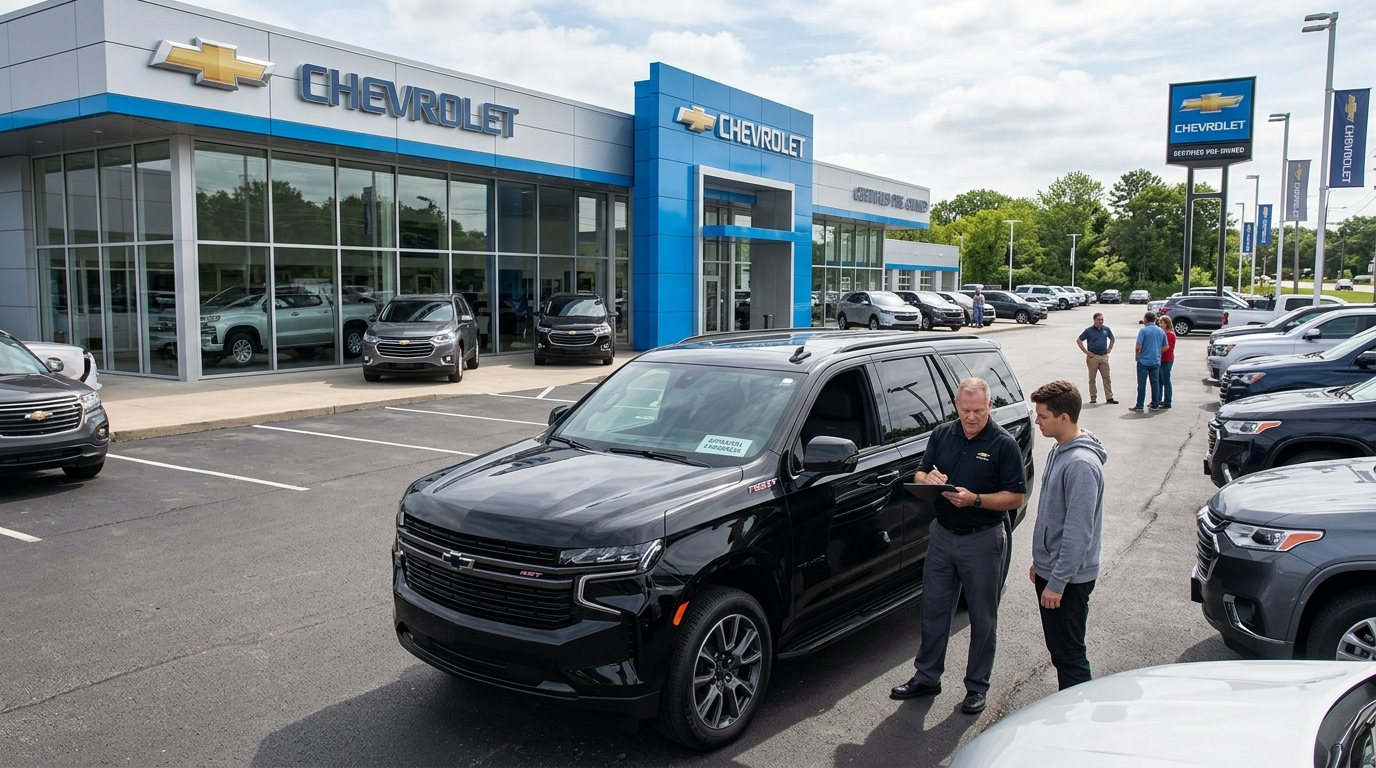
Having negative equity—often referred to as being “upside down” on your auto loan—means that the outstanding balance on your current vehicle loan is higher than the actual cash value of the vehicle. This situation is quite common, especially in the first few years of a car loan, due to the natural depreciation that occurs when a vehicle is driven off the lot. While you can still trade in a vehicle with negative equity, doing so requires careful financial planning to avoid long-term complications.
The primary risk of trading in an upside-down vehicle is rolling that negative equity into your next auto loan. If a dealership offers to pay off your remaining loan balance, they will typically add the unpaid difference to the principal of your new loan. This increases your new monthly payments, raises the total interest you will pay over the life of the loan, and immediately puts you in a deep negative equity position on your new vehicle. It can also make it difficult to secure competitive interest rates or obtain GAP insurance, which is crucial for protecting yourself if the vehicle is totaled in an accident.
To manage negative equity responsibly, our finance experts recommend exploring several practical strategies. If possible, you can pay off the negative equity difference out of pocket at the time of the trade-in to start your next loan with a clean slate. Alternatively, choosing a highly affordable, value-focused model can help keep your overall loan balance manageable. Our team can help you look at options like the compact Chevy Trailblazer or the highly capable light-duty Chevy Silverado 1500 to find a vehicle that fits your budget. When you are ready to review your financing options, you can submit a secure online credit application through our finance department.
Your Trade-In Checklist: Required Documents and Pre-Appraisal Steps
Arriving at the dealership fully prepared is the best way to ensure a fast, transparent, and successful trade-in process. Gathering your documents and preparing your vehicle beforehand allows our appraisers to verify your information quickly and present you with an official, written offer without unnecessary delays. Having everything organized also helps prevent multiple trips back and forth to your home.
Before you drive over for your appraisal, make sure you have gathered the following essential items:
- The Vehicle Title: If you own the vehicle outright, you must bring the physical title. All registered owners listed on the title should be present to sign the transfer documents.
- Loan Payoff Information: If you still have an active loan, bring your current lender’s name, account number, and a recent ten-day payoff statement.
- Valid Registration and ID: A current vehicle registration card and a valid driver’s license for all owners are required to complete the transaction.
- All Keys and Remotes: Bring every set of keys, key fobs, and remote starters associated with the vehicle, as missing keys can cost hundreds of dollars to replace.
- Service History Records: Having a folder of your routine maintenance receipts and oil change records provides proof of consistent care, which can bolster your vehicle’s physical condition grade.
When our appraisers perform a physical walk-around, they look at things most buyers overlook. For instance, families trading in an SUV often ask if we check the tire tread depth and brake wear during the appraisal. We do inspect these components, as safety items requiring replacement directly affect our reconditioning costs.
Once your paperwork is in order, you can use our digital tools to prequalify for financing online to streamline your purchase. This preparation makes it easy to transition directly into a highly capable truck like the heavy-duty Chevy Silverado 3500HD or a stylish crossover like the sporty Chevy Blazer.
Answers to Common Questions About Trading in Your Vehicle
Q: How does a negative vehicle history report affect my trade-in valuation?
A vehicle history report showing severe incidents, such as airbag deployment, structural damage, or odometer discrepancies, can reduce a trade-in valuation by 20% to 50% compared to a vehicle with a clean history. Our team reviews these reports to understand the vehicle’s structural integrity and resale viability.
Q: Is it better to trade in my vehicle at the end of the month or quarter?
Dealerships may be working toward specific sales targets at the end of a month or quarter, which can sometimes lead to more flexible overall deals on your next purchase. However, the core trade-in value of your vehicle remains primarily dependent on its physical condition, mileage, and current wholesale market demand.
Q: Do appraisers inspect the undercarriage for salt damage in south-central Pennsylvania?
Yes, because our region experiences cold winters with heavy road-salt use, appraisers pay close attention to undercarriage corrosion. Keeping your vehicle’s underbody clean throughout the winter can help preserve its structural condition and protect its long-term trade-in value.
Q: Can I trade in a vehicle if I do not have the spare keys or owner’s manual?
You can absolutely trade in your vehicle without these items, but having them will help maximize your offer. Replacing modern smart keys can cost several hundred dollars, so missing sets are typically factored into the vehicle’s reconditioning costs.
Q: Can I trade in an older vehicle with very high mileage?
Yes, we accept trade-ins of all ages, mileages, and conditions. While a pristine, low-mileage vehicle commands the highest value, older models still have utility and can be applied as a down payment toward a budget-friendly option like the Chevy Trax, a heavy-duty work truck like the Chevy Silverado 2500HD, or a pre-owned electric vehicle like the Bolt EV.
Take the Next Step Toward Your Next Vehicle
Upgrading your vehicle is a major decision, but the process becomes incredibly straightforward when you work with a team committed to transparency. At Buchanan Automotive Chevrolet, we are dedicated to providing clear explanations, fair valuations, and a pressure-free environment so you can trade in your vehicle with complete confidence. By understanding how valuations are calculated and arriving prepared with your documentation, you can take complete control of your buying journey.
Whether you are looking for the unmatched towing power of a heavy-duty pickup or the expansive cargo capacity of a spacious Chevy Suburban, our team is here to guide you every step of the way. We invite you to visit our showroom in Waynesboro for an on-site, no-obligation appraisal, or give us a quick call to speak with one of our valuation specialists today.
Keep Your Vehicle Running Strong
Keep your vehicle performing at its best with our service team:

0 comment(s) so far on How We Help You Build Confidence When Trading in Your Vehicle