


Lease vs. Finance a Car in Pennsylvania: Which Payment Path Fits You?
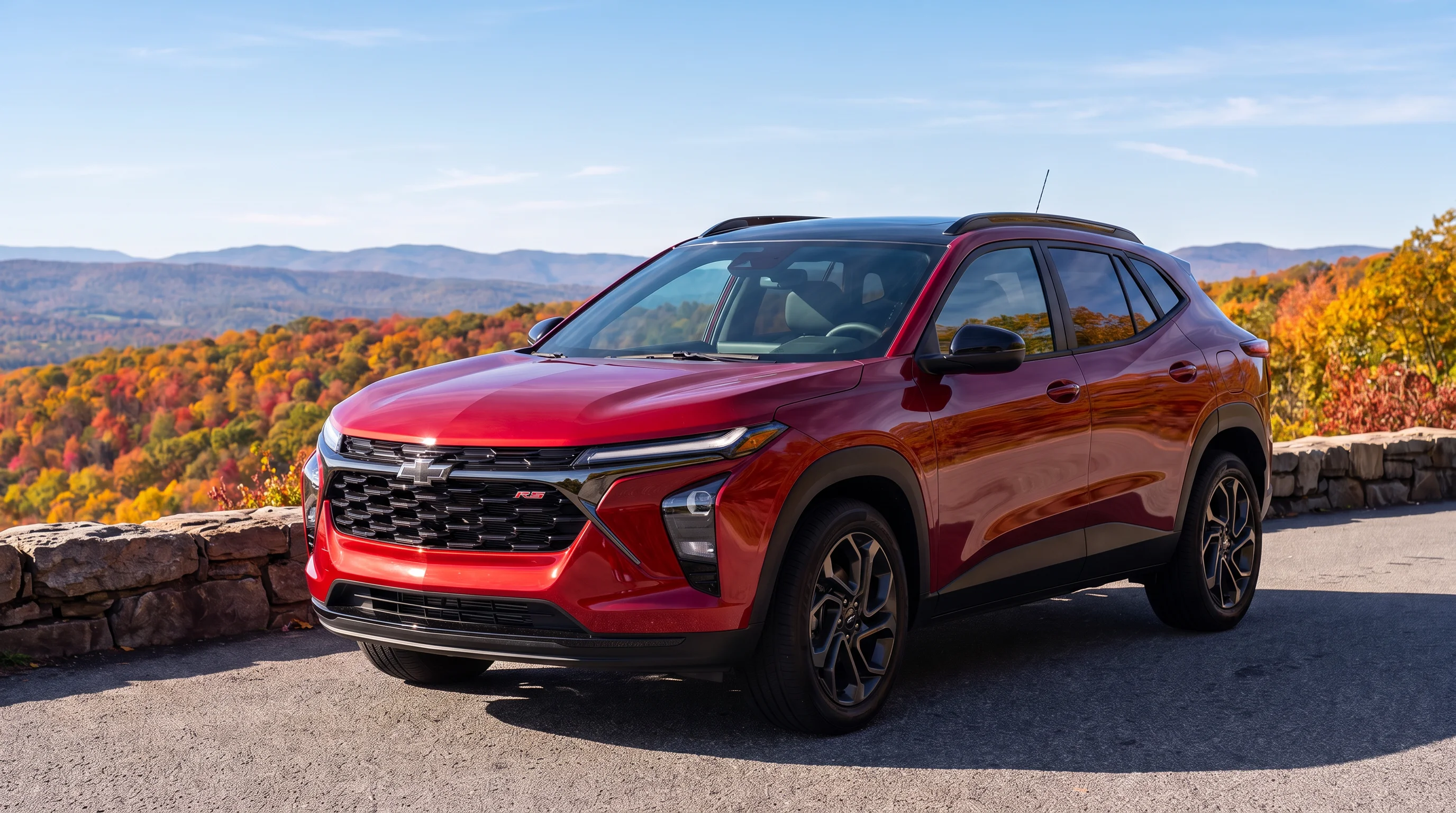
Financing provides direct financial equity to the driver, whereas leasing does not. When you finance a vehicle through an auto loan, every monthly payment reduces your principal balance toward full ownership. Once the loan is satisfied, you retain the vehicle as a tangible financial asset that holds resale or trade-in value. Leasing functions as a structured long-term rental where monthly payments cover only the vehicle’s projected depreciation and finance charges over the term, leaving zero vehicle equity when the keys are returned at contract end.
Does Leasing or Financing Build Equity for the Driver?
Building equity through purchase financing gives drivers flexibility for future vehicle acquisitions. As loan payments gradually build cash value in the vehicle, that equity can serve as a substantial down payment on your next vehicle purchase or trade-in upgrade. In contrast, lease payments grant continuous access to new vehicle technology and factory warranty coverage‖ without accumulating equity in the machine itself.
Whether equity accumulation fits your personal strategy comes down to how long you intend to drive your truck or SUV. If your goal is to eliminate monthly vehicle expenses entirely after a few years of payments, financing delivers clear asset growth.
Cited Source: Federal Reserve Vehicle Leasing FAQ — how lease rent charges differ from loan interest
‖ This information is provided for general educational purposes only and does not constitute legal advice. Warranty coverage depends on the specific terms of your vehicle’s warranty agreement. Consult your owner’s manual or a qualified legal professional for guidance on your individual situation.
Why Loan Payments Run Higher Than Lease Payments on the Same Vehicle
Loan payments are higher than lease payments for the exact same car because an auto loan pays off the entire selling price of the vehicle plus interest charges, while a lease only covers the projected depreciation plus finance fees incurred during the lease term.
When you finance a vehicle purchase, your monthly payment is calculated by taking the complete purchase price, minus any initial down payment or trade-in credit, plus applicable sales tax and finance rates, spread across a selected timeline. Because you are acquiring 100 percent of the vehicle’s financial value, each monthly installment is naturally larger.
Lease calculations isolate only the portion of value the vehicle loses while in your possession. For instance, if a new truck costs $50,000 and is projected to be worth $30,000 after three years, a lease structure only requires financing the $20,000 difference, along with associated lease interest and processing fees. This reduced principal burden keeps monthly lease commitments noticeably lower than purchase loans on the exact same vehicle trim.
Manufacturer promotions can further alter these monthly cost dynamics. Low-APR financing offers through GM Financial on select new Chevrolet models lower the borrowing cost of purchasing, which narrows the monthly payment gap between financing and leasing. These programs change regularly, so the gap between a lease payment and a loan payment on the same vehicle is not fixed.
Cited Source: Federal Reserve Consumer Lease Disclosure (Regulation M) — depreciation and rent charge derivation on a consumer lease
Is It Cheaper to Lease or Finance Over the Long Term?
Leasing is generally cheaper on a monthly out-of-pocket basis, but financing is significantly cheaper over a long-term multi-year timeline. Short-term monthly expenses favor leasing because payments are structured strictly around vehicle depreciation, requiring lower cash reserves to drive a factory-fresh automobile every two to three years.
Over an extended timeframe, financing becomes the less expensive path because of payment elimination. A buyer who finances a vehicle clears their debt after the loan term expires, allowing them to drive without monthly vehicle financing costs for years. A driver who leases continuously pays ongoing monthly fees indefinitely while never reaching a period of zero payment obligations.
Pennsylvania Tax Treatment: Lease vs. Purchase
Long-term cost comparisons must also factor in taxation, and in Pennsylvania the tax treatment is not the same for the two paths. Pennsylvania assesses a 6% statewide vehicle sales tax. On a financed purchase, that 6% applies to the purchase price less the value of any trade-in.
On a lease, Pennsylvania charges the 6% sales tax on your lease payments and adds a separate 3% Motor Vehicle Lease Tax on the total lease price. A Pennsylvania lease therefore carries 9% in combined state tax where a financed purchase carries 6%. Allegheny County adds 1% and Philadelphia adds 2%; everywhere else in the commonwealth, including Franklin County, the rate stays at 6%.
Cited Source: Pennsylvania Department of Revenue — state tax rates and Motor Vehicle Lease Tax
| Financial Feature | Vehicle Lease | Vehicle Purchase Finance |
|---|---|---|
| Monthly Payment Amount | Typically lower | Typically higher |
| Ownership and Equity | None; vehicle returned at lease end | Full ownership upon loan payoff |
| Pennsylvania State Tax | 6% sales tax on payments plus 3% Motor Vehicle Lease Tax | 6% sales tax on price less trade-in |
| Long-Term Total Cost | Higher due to continuous terms | Lower once the loan is paid off |
| Customization Allowance | Must remain factory original | Unlimited modifications allowed |
| Mileage Constraints | Restricted by contract terms | No contractual mileage limit |
For residents driving long rural stretches near Greencastle, accumulating high annual mileage on farmland highways makes continuous leasing costly due to overage fees. In those high-mileage scenarios, financing a model from the new vehicle inventory avoids contractual mileage penalties. Buyers focused on a lower entry cost often look to affordable used cars in Waynesboro instead, where full ownership comes at a smaller initial outlay.
What Is Residual Value and How Does It Affect Your Lease Payment?
Residual value is the value a lender assigns to a vehicle at the planned conclusion of a lease agreement, and it directly determines how much depreciation the lessee must fund each month. Higher residual values translate directly into lower monthly lease payments. It is also the price stated in your contract if you choose to buy the vehicle at lease end.
Automotive lenders and financial institutions calculate residual values using historical market data, brand reliability records, and segment resale trends. If a vehicle retains a high percentage of its original price after three years, the net capitalized cost minus the residual value leaves a smaller financial gap. Because the lessee only pays for that specific gap, strong residual retention reduces monthly obligations.
Lease contracts establish strict operational terms to protect the vehicle’s future residual value, including annual mileage allowances that commonly range from 10,000 to 15,000 miles per year. Exceeding contracted mileage limits or inflicting excessive wear results in end-of-term financial penalties intended to offset the vehicle’s extra market depreciation.
Your Options at Lease End
At the conclusion of the contract, lease agreements grant the option to return the vehicle, pay any lingering disposition or overage fees, or purchase the vehicle outright at the pre-determined residual price stated in the original paperwork.
| Option | What Happens | What You Pay |
|---|---|---|
| Return the vehicle | Vehicle goes back to the lessor at contract end | Disposition fee, plus any per-mile overage and excess wear-and-tear charges |
| Buy the vehicle | You exercise the purchase option in your contract | The pre-determined residual value, plus applicable state taxes and purchase option fees |
| End the lease early | Lease is terminated ahead of the scheduled term | A substantial early termination charge; the earlier you end it, the larger the charge |
Cited Source: Federal Reserve Consumer Lease Disclosure (Regulation M) — residual value, disposition fee, and purchase option structure
When Buying Becomes Cheaper Than Leasing Again and Again
Buying a vehicle becomes cheaper than continuous leasing at the point when the original vehicle loan is paid in full and monthly principal obligations cease. At the loan terms most buyers carry today, that point arrives closer to year six than year four.
During the first three years, a buyer financing a new car pays higher monthly installments than someone leasing the exact same vehicle. The payoff point depends heavily on term length, and terms have stretched: Experian reported an average new-vehicle loan term of 69.5 months in the second quarter of 2026, and roughly one in three vehicle loans now runs beyond 72 months. Once the loan does reach maturity, the owner transitions into a period of payment-free transportation. Continuous lessees, by comparison, immediately start a new lease cycle with a fresh round of down payments, dealer fees, and monthly invoices.
While an aging, owned vehicle will eventually incur routine maintenance and repair costs, these periodic maintenance fees are significantly lower than a full year of ongoing lease payments. Replacing brake components, tires, or fluid filters periodically requires far less capital than carrying a continuous lease payment year after year, which Experian put at an average of $617 a month for new vehicles in the second quarter of 2026.
Cited Source: Experian — State of the Automotive Finance Market, Q2 2026
How Money Factor, Fees, and Contract Terms Shape Total Lease Costs
Total lease costs are driven by three primary variables: the net capitalized cost, the vehicle’s residual value, and the money factor, which serves as the lease agreement’s internal financing charge.
Converting Money Factor to APR
The money factor represents the interest rate applied to a lease, expressed as a small decimal number rather than a standard annual percentage rate. To convert a money factor into a familiar annualized interest rate equivalent, multiply the money factor by 2,400. For example, a money factor of 0.0025 translates to an equivalent APR of 6%.
Monthly lease finance fees are calculated using a specific formula: Monthly Finance Fee = (Net Capitalized Cost + Residual Value) × Money Factor
Secondary Lease Costs
Beyond basic depreciation and money factor charges, lease contracts contain secondary cost items that dictate your final outlay:
Acquisition Fees
Acquisition and origination fees charged at contract inception.
Disposition Fees
End-of-term disposition fees required when returning the vehicle.
Mileage Overage
Per-mile overage penalties for exceeding contracted mileage allowances.
Excess Wear
Excess wear-and-tear assessments for unaddressed exterior or interior damage.
Lessee responsibility extends to maintaining the vehicle according to manufacturer standards throughout the contract window, and unaddressed wear can surface as a charge during the lease-end inspection.
Cited Source: Federal Reserve Vehicle Leasing FAQ — money factor, rent charge calculation, and mileage limits
Frequently Asked Questions About Vehicle Leasing and Financing
How does an auto loan APR compare directly to a lease money factor?
An auto loan Annual Percentage Rate (APR) measures the yearly borrowing cost of a purchase loan as a standard percentage. A lease money factor represents the monthly finance charge on a lease agreement expressed as a decimal. You can quickly convert a money factor to an equivalent interest rate by multiplying the decimal by 2,400.
What happens if a leased vehicle accumulates more miles than the contract allowance?
Lease agreements specify an annual limit, typically between 10,000 to 15,000 miles per year. Exceeding this total allowance results in per-mile overage fees at lease return, usually calculated at a fixed rate per excess mile. Drivers can avoid these charges by purchasing additional miles upfront or exercising their contract’s option to buy the vehicle at lease end.
Can a driver buy out their leased vehicle before or at the end of the contract term?
Most automotive lease contracts contain an explicit purchase option allowance. Lessees can buy the vehicle at contract end for the pre-determined residual value stated in their paperwork, plus any applicable state taxes and purchase option fees. Early buyouts are also permitted, but ending a lease ahead of schedule can carry a substantial early termination charge, and the earlier you end it, the larger that charge is likely to be. Ask your lender for a written payoff quote before committing.
What state taxes apply to vehicle purchases and leases in Pennsylvania?
Pennsylvania levies a 6% statewide vehicle sales tax. On purchase loans, tax is calculated on the total purchase price minus trade-in allowances. On vehicle leases, the 6% sales tax applies to your lease payments and Pennsylvania adds a separate 3% Motor Vehicle Lease Tax on the total lease price, for 9% in combined state tax. Only two jurisdictions add local tax: Allegheny County adds 1% and Philadelphia adds 2%. Franklin County and the surrounding region stay at the 6% base rate.
How do down payments impact monthly lease payments versus loan payments?
On an auto loan, a down payment reduces the total principal balance borrowed, lowering both monthly costs and total interest paid over the life of the loan. On a lease, a capital cost reduction down payment lowers monthly fees by paying depreciation upfront, but it does not alter the vehicle’s pre-set residual value.
Cited Source: Pennsylvania Department of Revenue — Pennsylvania vehicle sales tax and Motor Vehicle Lease Tax | Federal Reserve Vehicle Leasing FAQ — mileage limits, purchase options, and capitalized cost reduction
Selecting Your Optimal Automotive Financial Strategy
Choosing between leasing and financing depends on your personal vehicle usage patterns, annual mileage expectations, and long-term financial goals. Drivers seeking lower monthly payments, predictable factory warranty protection‖, and regular vehicle upgrades every few years often thrive under a lease structure. Conversely, drivers focused on long-term value, unlimited mileage freedom, and complete equity ownership profit more from financing a vehicle purchase.
‖ This information is provided for general educational purposes only and does not constitute legal advice. Warranty coverage depends on the specific terms of your vehicle’s warranty agreement. Consult your owner’s manual or a qualified legal professional for guidance on your individual situation.
Our finance specialists at Buchanan Automotive Chevrolet are ready to lay out side-by-side transaction breakdowns tailored to your driving habits. Visit our showroom at 1035 E Main St, Waynesboro, PA 17268 to compare competitive financing offers, evaluate your trade-in equity, and select the optimal payment path for your next car, truck, or SUV. Our finance center can walk you through both paths before you commit.
Disclaimers
‖ This information is provided for general educational purposes only and does not constitute legal advice. Warranty coverage depends on the specific terms of your vehicle’s warranty agreement. Consult your owner’s manual or a qualified legal professional for guidance on your individual situation.

0 comment(s) so far on Lease vs. Finance a Car in Pennsylvania: Which Payment Path Fits You?