


How Does the 2026 Chevy Blazer EV Compare to the Tesla Model Y?
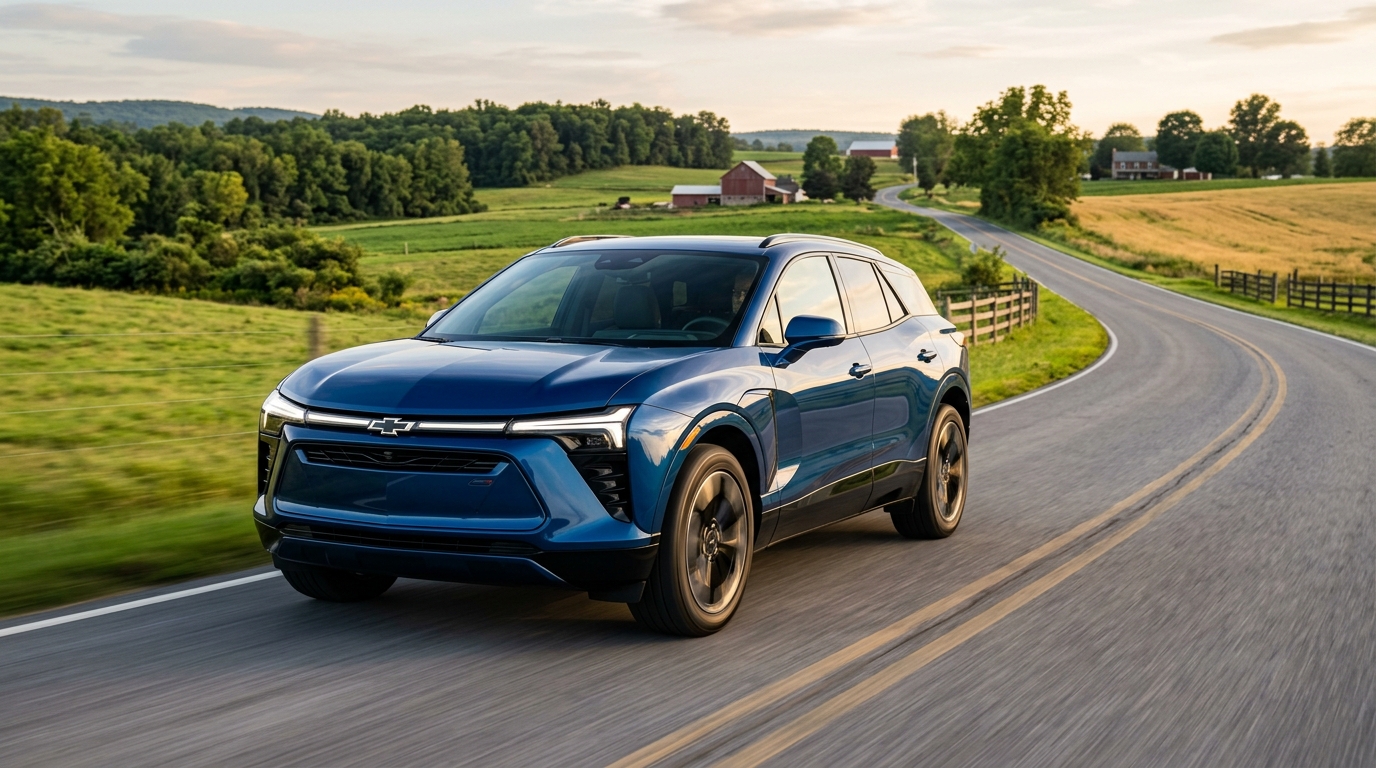
The 2026 Chevrolet Blazer EV offers a quieter cabin, a smoother ride, and advanced driver-assistance technology compared with the Tesla Model Y, while matching or exceeding key midsize electric crossover capabilities. Built on General Motors’ Ultium EV architecture, the Blazer EV provides up to an EPA-estimated 312 miles of driving range, a standard 17.7-inch infotainment touchscreen, and available Super Cruise hands-free driving capability. While the Model Y relies on a stiffer suspension setup and minimalist interior controls, the Blazer EV pairs modern digital displays with tactile physical controls for climate and volume, giving daily drivers a balanced blend of intuitive technology and road comfort.
When cross-shopping these two midsize electric crossovers, cabin insulation and ride quality emerge as immediate differentiators. The Model Y uses a firm suspension setup that transmits road imperfections directly into the passenger cabin. In contrast, Chevrolet engineered the Blazer EV with isolated subframes and comprehensive acoustic glass, suppressing wind noise and tire hum at highway speeds. For local drivers commuting across south-central Pennsylvania, that difference in cabin noise translates directly into reduced fatigue during long drives.
Interior usability also sets the two crossovers apart. Tesla consolidates virtually every vehicle control into a single central screen, requiring drivers to navigate sub-menus to adjust simple settings like side mirrors, wiper speeds, or climate airflow. Chevrolet designed the Blazer EV with dedicated physical controls for climate functions and audio volume alongside the 17.7-inch infotainment touchscreen with Google built-in. Driver information is clearly presented on a separate 11-inch driver display, ensuring vital metrics like speed, battery charge percentage, and navigation prompts remain directly in the driver’s line of sight.
Charging versatility is another key consideration for prospective electric vehicle buyers. The 2026 Blazer EV features a native NACS charge port, providing direct plug-and-play access to over 250,000 public chargers across North America, including the Tesla Supercharger network, without needing a third-party adapter. Combined with support for up to 190 kW DC fast charging on performance models, the Blazer EV makes long-distance travel and rapid highway charging stops fast and straightforward.
Shoppers interested in exploring current electric crossover options can view our new-vehicle inventory to see available configurations. To arrange a test drive or learn more about electric vehicle capabilities, give our team a quick call or stop by our Waynesboro showroom to speak with a sales specialist.
Table of Contents
- Should You Choose FWD or AWD on the 2026 Chevy Blazer EV for Official Range?
- How Much Does the 2026 Chevrolet Blazer EV Cost and What Features Come Standard on the LT Trim?
- How Much Can Franklin County Commuters Save on Fuel and Where Are I-81 Fast Chargers Located?
- Does the Blazer EV Cost Less to Maintain Than a Gas Blazer While Delivering a Quieter Highway Ride?
- Frequently Asked Questions About 2026 Chevy Blazer EV Range, Charging, and Ownership
- Where Can You Test Drive and Buy a 2026 Chevrolet Blazer EV Near Franklin County?
Should You Choose FWD or AWD on the 2026 Chevy Blazer EV for Official Range?
Choosing front-wheel drive on the 2026 Chevy Blazer EV delivers the maximum official driving range at an EPA-estimated 312 miles, while all-wheel drive models trade a modest amount of range for enhanced dual-motor traction. The front-wheel-drive LT FWD and RS FWD configurations generate 288 hp and 333 lb-ft of torque from a single electric motor paired with an automatic 1-speed transmission, achieving an EPA-estimated 92 city / 77 hwy MPGe. For commuters prioritizing maximum distance between charging stops, front-wheel drive represents the most energy-efficient setup in the lineup.
Opting for all-wheel drive adds a second electric motor to the front axle, creating an electric dual-motor powertrain that delivers instant torque distribution to all four wheels. The LT AWD and RS AWD trims produce 288 hp and 333 lb-ft of torque through their automatic 1-speed drive system. Because both axles consume energy when accelerating, the EPA-estimated range for all-wheel-drive LT and RS models is 283 miles. For drivers navigating winter road conditions or hilly terrain around Greencastle, the extra traction provided by all-wheel drive easily compensates for the 29-mile difference in total range.
At the top of the lineup, the performance-focused SS AWD utilizes a high-output dual-motor powertrain that generates 340 hp and 325 lb-ft of torque with an automatic 1-speed transmission. Equipped with a larger 102-kWh battery pack, the SS AWD achieves an EPA-estimated 302 miles of range while offering performance capabilities like Wide Open Watts mode, which enables acceleration from 0 to 60 mph in a GM-estimated 3.4 seconds.
To determine which drivetrain best fits your daily commute and weekend travel, browse our Blazer EV selection or compare overall size and efficiency against the compact Chevy Equinox EV. Buyers considering pre-owned electric options can also check our current pre-owned inventory for available midsize crossovers.
Engine & Performance
Powertrain specs by trim
| Feature | LT AWD | LT AWD | LT FWD | RS AWD | RS AWD | RS FWD | SS AWD |
|---|---|---|---|---|---|---|---|
| Horsepower | 340 hp | 288 hp | 288 hp | 340 hp | 288 hp | 288 hp | 340 hp |
| Torque | 325 lb-ft | 333 lb-ft | 333 lb-ft | 325 lb-ft | 333 lb-ft | 333 lb-ft | 325 lb-ft |
| Transmission | automatic 1-speed | automatic 1-speed | automatic 1-speed | automatic 1-speed | automatic 1-speed | automatic 1-speed | automatic 1-speed |
| Drivetrain | All-wheel drive | All-wheel drive | Front-wheel drive | All-wheel drive | All-wheel drive | Front-wheel drive | All-wheel drive |
Fuel Economy
Fuel economy and range by trim
| Feature | LT AWD | LT AWD | LT FWD | RS AWD | RS AWD | RS FWD | SS AWD |
|---|---|---|---|---|---|---|---|
| MPG | 92 city / 77 hwy / 85 combined | 102 city / 86 hwy / 94 combined | 114 city / 95 hwy / 104 combined | 92 city / 77 hwy / 85 combined | 102 city / 86 hwy / 94 combined | 114 city / 95 hwy / 104 combined | 92 city / 77 hwy / 85 combined |
| EV range | 286 mi | 283 mi | 312 mi | 286 mi | 283 mi | 312 mi | 302 mi |
| Battery (kWh) | 102 | 85 | 85 | 102 | 85 | 85 | 102 |
How Much Does the 2026 Chevrolet Blazer EV Cost and What Features Come Standard on the LT Trim?
The 2026 Chevrolet Blazer EV starts at a base MSRP of $44,700 for the entry-level LT FWD, offering a comprehensive set of premium technology, safety, and comfort features as standard equipment. Every Blazer EV trim carries a standard $1,795 destination charge. Moving through the lineup, the LT AWD starts at a base MSRP of $47,700, the sporty RS FWD starts at $50,500, the RS AWD is priced at $53,500, and the high-performance SS AWD tops the range at $60,700.
Standard equipment on the LT trim establishes a high benchmark for the midsize electric SUV segment. Drivers are greeted by a massive 17.7-inch infotainment touchscreen featuring Google built-in compatibility, which provides native navigation, Google Assistant voice controls, and downloadable vehicle apps. A complementary 11-inch driver display sits behind the steering wheel, presenting customizable gauge layouts, driver-assist alerts, and battery status metrics.
Safety technology on the LT trim is anchored by Chevy Safety Assist, a suite of six active safety features including:
- Forward Collision Alert with Automatic Emergency Braking
- Front Pedestrian Braking
- Lane Keep Assist with Lane Departure Warning
- Following Distance Indicator
- IntelliBeam auto high beams
Additionally, the LT trim includes an HD Surround Vision 360-degree camera system, rear parking sensors, a standard Dual Level Charge cord supporting both 120V Level 1 and 240V Level 2 charging, and a native NACS charge port. Cabin utility remains impressive across all trims, providing about 25.5 cu ft of cargo space behind the second row and up to about 59 cu ft with the rear seats folded flat, along with a standard 3,500 lbs towing capacity when properly equipped.
Shoppers interested in reviewing available options or checking current vehicle arrivals can visit our dealership home page to see featured model arrivals and current showroom updates.
Pricing
Pricing by trim
| Feature | LT AWD | LT AWD | LT FWD | RS AWD | RS AWD | RS FWD | SS AWD |
|---|---|---|---|---|---|---|---|
| Base MSRP | $54,700 | $47,700 | $44,700 | $55,100 | $53,500 | $50,500 | $60,700 |
| Destination charge | $1,795 | $1,795 | $1,795 | $1,795 | $1,795 | $1,795 | $1,795 |
How Much Can Franklin County Commuters Save on Fuel and Where Are I-81 Fast Chargers Located?
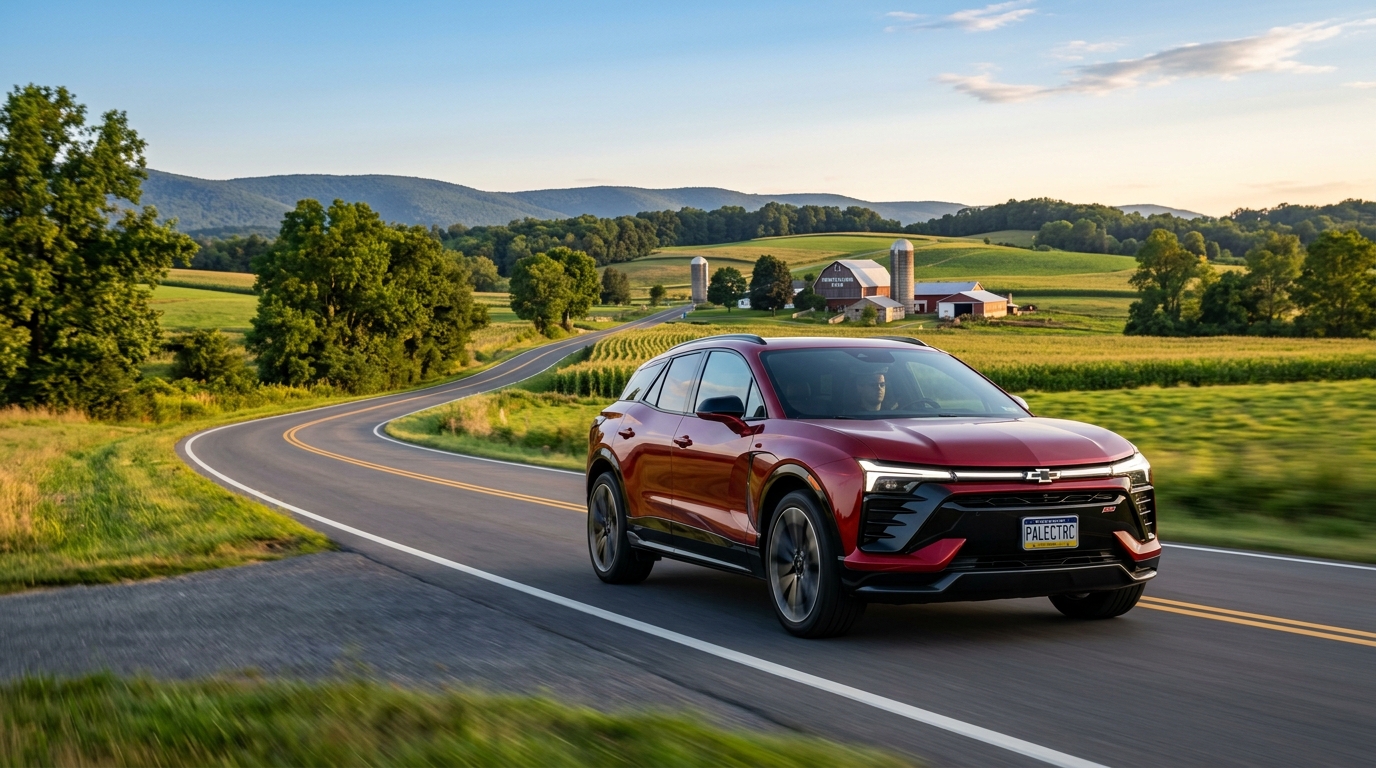
A daily commuter in Franklin County traveling 40 miles round-trip can save between $1,000 and $1,400 annually on fuel costs by switching from a traditional 22-mpg gas SUV to a 2026 Chevy Blazer EV. Based on average regional residential electricity rates of roughly 15 cents per kilowatt-hour, fully charging an 85-kWh battery pack at home overnight costs approximately $12.75 for up to 312 miles of driving range. In contrast, fueling a gas-powered midsize SUV for the same distance at $3.60 per gallon costs over $50, making home charging substantially more economical for daily driving.
Public charging infrastructure along local transit corridors further supports electric vehicle ownership. Multiple high-speed DC fast charging stations are situated along the Interstate 81 corridor in Chambersburg, providing convenient mid-commute top-ups for regional drivers. Public stations near major shopping plazas and highway exits offer charging speeds up to 150 kW or 190 kW, allowing a Blazer EV battery to recharge from 10% to 80% state of charge in roughly 39 minutes under optimal conditions.
For commuters planning their weekly driving habits, home charging serves as the primary energy source. Installing a dedicated 240-volt Level 2 home charging station allows the vehicle to accept up to 11.5 kW of AC power, delivering a full charge overnight while the vehicle is parked. In cold winter conditions, preconditioning the cabin while plugged into home power helps preserve overall battery energy before hitting the road.
If you are thinking about transitioning to an electric vehicle for your daily commute, our trade-in specialists can help you value your trade-in online to see how much equity you can apply toward a new electric crossover.
Does the Blazer EV Cost Less to Maintain Than a Gas Blazer While Delivering a Quieter Highway Ride?
The Chevrolet Blazer EV costs approximately 40% less to maintain over its lifetime than a traditional internal combustion engine Blazer because its electric drive system eliminates dozens of mechanical wear components. Electric vehicles have no engine oil to change, no spark plugs or timing belts to replace, no transmission fluid services, and no exhaust systems to maintain. Routine maintenance for the Blazer EV is primarily limited to tire rotations, cabin air filter replacements, brake fluid inspections, and windshield wiper replacements.
Brake maintenance costs are also lower on the Blazer EV due to regenerative braking technologies, including One Pedal Driving. When the driver lifts off the accelerator pedal, the electric motor captures kinetic energy to slow the vehicle down, feeding power back into the high-voltage battery. Because the electric motor performs much of the routine deceleration, the traditional mechanical brake pads and rotors experience significantly less friction wear, extending brake component life far beyond that of a conventional gas crossover.
On the highway, the Blazer EV delivers a noticeably quieter and smoother ride than gas-powered midsize crossovers. Without engine noise, vibration, or transmission gear shifts, acceleration is seamless and immediate. Chevrolet insulated the subframes and chassis mounting points to isolate road vibration, while thick acoustic laminated glass suppresses ambient traffic and wind noise. The result is a calm, serene cabin environment that makes daily highway driving comfortable and relaxed.
Frequently Asked Questions About 2026 Chevy Blazer EV Range, Charging, and Ownership
Q: What is the official driving range of the 2026 Chevrolet Blazer EV?
Front-wheel-drive LT and RS models of the 2026 Chevrolet Blazer EV come equipped with an 85-kWh battery pack, delivering an EPA-estimated range of up to 312 miles. All-wheel-drive LT and RS models achieve an EPA-estimated 283 miles of range, while the performance-oriented SS AWD model with its larger 102-kWh battery pack delivers an EPA-estimated 302 miles on a full charge.
Q: How long does it take to charge the Blazer EV at home versus a public fast charger?
Using a Level 2 240-volt home charging setup operating at 11.5 kW, a full charge takes approximately 8 hours overnight. At a public DC fast charging station capable of 190 kW output, the Blazer EV can recharge from 10% to 80% state of charge in about 39 minutes under ideal battery and ambient temperature conditions.
Q: How does cold winter weather affect real-world battery range?
In cold winter weather with prolonged sub-freezing temperatures, electric vehicle battery efficiency temporarily decreases. Drivers can expect a range reduction between 15% and 30% on the coldest days of the year. Utilizing cabin preconditioning while the vehicle is plugged into a home charger helps minimize winter range impact by warming the battery and interior using grid power before departure.
Q: Are federal EV tax credits currently available for new Blazer EV purchases?
Federal clean vehicle tax credits under IRC §30D were terminated by Public Law 119-21 for vehicles acquired after September 30, 2025. Consequently, new purchases made today do not qualify for a federal tax credit. Buyers who entered into a binding written contract and made a down payment on or before September 30, 2025, should consult their tax preparer and dealership finance representative to verify eligibility upon vehicle delivery.
Q: What warranty coverage protects the Blazer EV battery and drive components?
Chevrolet backs the Blazer EV with an 8-year or 100,000-mile EV Component Limited Warranty, which covers the high-voltage battery pack and electric drive units against defects. Additional standard coverage includes a 3-year/36,000-mile Bumper-to-Bumper Limited Warranty, roadside assistance coordination, and built-in vehicle connectivity features.
Buyers who want to explore how the electric crossover compares with traditional gas models can research the conventional Chevy Blazer to evaluate dimensions, styling, and traditional powertrain specifications.
Where Can You Test Drive and Buy a 2026 Chevrolet Blazer EV Near Franklin County?
Buchanan Automotive Chevrolet is your local destination for the 2026 Chevrolet Blazer EV, offering a full selection of new electric crossovers, current inventory, and flexible financing solutions. Our sales team is ready to walk you through charging equipment options, explain driver-assist features like Super Cruise, and set up a comprehensive test drive on local roads so you can experience the quiet acceleration and smooth handling of the Ultium EV platform firsthand.
Whether you are looking to trade in your current gas vehicle or purchase your first all-electric crossover, our dealership simplifies the process from start to finish. You can easily start your purchase online by choosing to apply for financing before visiting our showroom.
Visit us today to explore our full inventory, review trim options, and see how the Blazer EV can elevate your daily drive. You can get directions to our Waynesboro showroom at 1035 E Main St, Waynesboro, PA 17268, or give our sales specialists a call at (833) 669-0849 to schedule your test drive today.
Keep Your Vehicle Running Strong
Keep your vehicle performing at its best with our service team:
© 2026 Buchanan Automotive Chevrolet. All rights reserved.

0 comment(s) so far on How Does the 2026 Chevy Blazer EV Compare to the Tesla Model Y?