

What Should You Check Before Buying a Used Car?
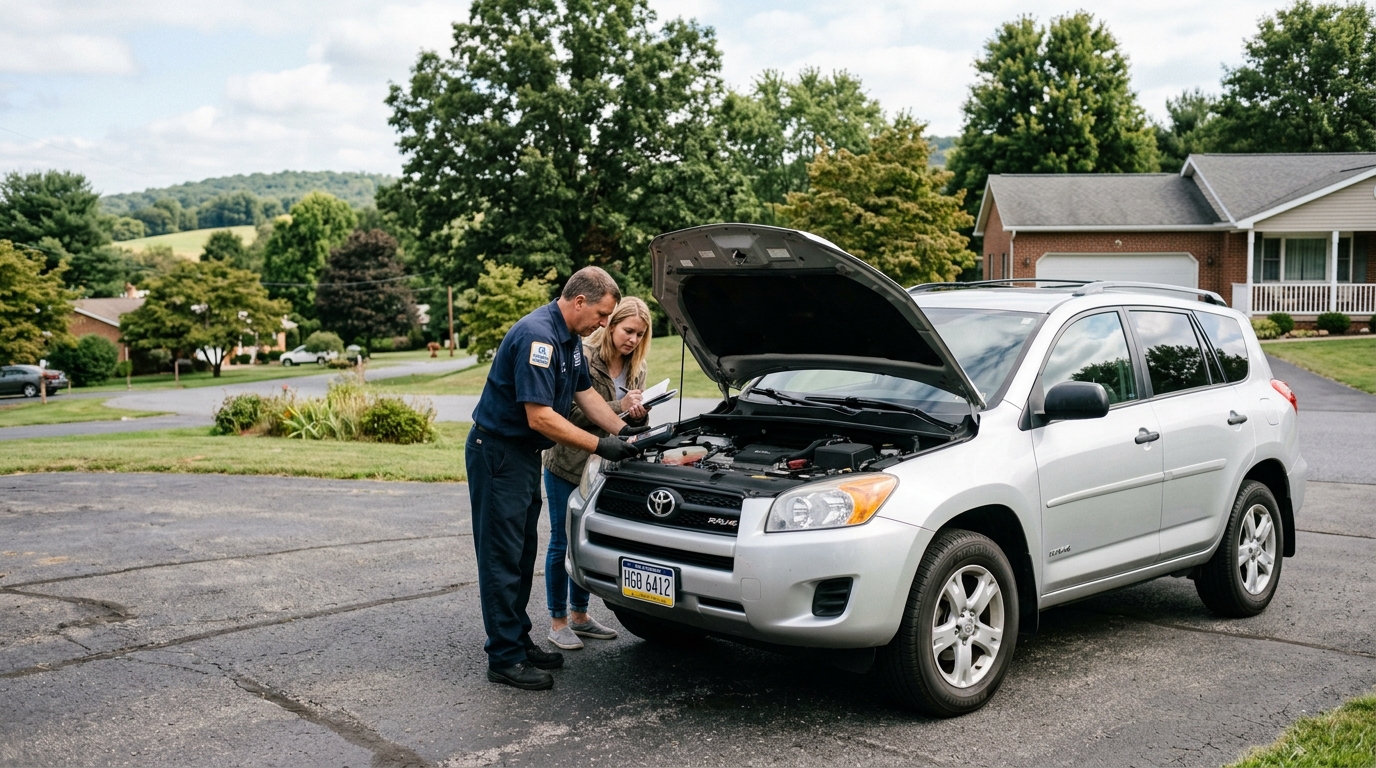
Before buying a used car in Pennsylvania, you must review the vehicle history report for title status and maintenance records, budget for mandatory DMV fees including the $72 title fee and $48 registration fee plus 6% state sales tax, arrange a comprehensive pre-purchase mechanical inspection, and complete a test drive across highway and local road speeds.
Navigating the pre-owned market requires a structured checklist to ensure the vehicle you choose is mechanically sound and legally clear. In Pennsylvania, completing a transaction involves specific state paperwork that must be submitted to PennDOT or an authorized agent within 20 days of sale. This documentation includes the signed title, a completed Form MV-4ST Vehicle Sales and Use Tax Return/Application for Registration, a written bill of sale, and proof of valid state auto insurance. Verifying that the title has no active liens protects you from taking on someone else’s unpaid debt.
When preparing your overall budget, baseline DMV fees for a standard passenger vehicle total $120 before applying the state sales tax, which is calculated on the agreed purchase price. If you choose to finance the vehicle, expect an additional $36 lien recording fee to be added to your initial registration paperwork.
Beyond paperwork and state requirements, the physical condition of the car demands equal scrutiny. A thorough walkthrough should include inspecting body panel fitment for signs of unrecorded structural repair, evaluating tire tread depth, checking fluid levels and colors, and looking under the frame for severe corrosion or fluid leaks. Completing a test drive that includes acceleration, firm braking, and highway cruising speeds will help surface transmission slippage, alignment pulls, or suspension clunks that might remain hidden while idling in a driveway. To inspect our pre-owned inventory in person, you can visit our Waynesboro showroom address or give our team (833) 669-0849 for immediate vehicle assistance.
Table of Contents
- What Should You Look for in a Vehicle History Report Beyond Accidents?
- How Do Age, Mileage, and Drivetrain Selection Impact Performance in Waynesboro Winters?
- What Are Inspection Requirements and Mechanical Checklist Priorities?
- What Are the Advantages of Buying From a Local Dealership vs a Private Seller?
- How Far Should You Expand Your Search Radius to Find the Right Used Car?
- Common Questions About Optimizing Used Car Searches
What Should You Look for in a Vehicle History Report Beyond Accidents?
A vehicle history report must be evaluated for consistent mileage progression, title brand flags like salvage or flood rebuilt status, routine service records, ownership transfer frequency, and open manufacturer recalls. While crash history is usually the first item buyers scan for, secondary data points often reveal far more about how a car was maintained and driven over its lifespan.
Odometer mileage patterns provide immediate insight into a vehicle’s operational history. Look for steady, incremental mileage accumulation logged during routine state inspections or service visits. Inconsistent jumps, sudden drops, or long gaps where no mileage was recorded for years can indicate odometer tampering or prolonged storage, both of which deserve deeper inquiry.
- Title Brands: Check for flags such as salvage, rebuilt, lemon law buyback, or flood damage, which permanently affect vehicle safety and resale value.
- Ownership History: A single-owner vehicle or one with long-term ownership periods generally indicates consistent care, whereas multiple sales in rapid succession can signal recurring mechanical issues that consecutive owners chose to pass along.
- Maintenance Logs: Frequent oil changes, brake services, and fluid flushes documented on the report confirm that the previous owner adhered to recommended factory schedules.
- Open Recalls: Ensure all safety-related manufacturer recall campaigns have been completed by an authorized dealership service center prior to taking delivery.
Cross-referencing historical records against the physical condition of the car helps confirm the seller’s narrative. If you prefer the absolute confidence of factory-backed reconditioning and full documentation, exploring our certified pre-owned Chevrolet inventory provides verified vehicle histories alongside stringent multipoint inspection standards. Buyers considering a brand-new platform can also browse our latest new vehicle inventory to compare long-term ownership advantages.
How Do Age, Mileage, and Drivetrain Selection Impact Performance in Waynesboro Winters?
Selecting a pre-owned vehicle aged 4 to 7 years with 60,000 to 100,000 miles provides an ideal balance of depreciation savings and remaining service life, while choosing an all-wheel drive or four-wheel drive system delivers necessary traction on icy winter roads. Combining appropriate vehicle age with a capable drivetrain ensures both mechanical dependability and confident cold-weather handling.
Regional winter weather brings snow, slush, and freezing rain to south-central Pennsylvania, making drivetrain selection a critical performance factor. An all-wheel drive system continuously monitors wheel slip and distributes power between axles automatically, providing immediate stability on slick surfaces. For drivers navigating steeper rural inclines or unpaved back roads around Greencastle, a dedicated four-wheel drive system with low-range gearing offers maximum mechanical grip when clearing snow-covered farm routes.
Families test-driving pre-owned SUVs usually ask how the all-wheel drive system engages on slick inclines before they ask about infotainment options. Engine sizing also impacts winter driveability and daily utility:
- Turbocharged Four-Cylinders: Offer strong low-end torque for quick acceleration on slippery roads while maintaining excellent highway fuel economy.
- Naturally Aspirated V6 Engines: Deliver smooth, predictable power delivery without sudden boost spikes, making throttle control easier on icy pavement.
- V8 Engines: Supply maximum towing capacity and heavy-duty performance for larger trucks and full-size SUVs tasked with winter hauling.
Vehicles within the 60,000 to 100,000-mile range have already absorbed their steepest drop in initial value while retaining substantial mechanical longevity when properly serviced. Evaluating rust-prevention coatings and suspension components on vehicles in this age bracket ensures long-term durability against road salt exposure.
What Are Inspection Requirements and Mechanical Checklist Priorities?
Pennsylvania mandates an annual safety inspection and OBD-II emissions check for passenger vehicles, making it vital to prioritize a pre-purchase mechanical inspection that covers engine compression, transmission shifting, suspension condition, braking wear, undercarriage rust, and active trouble codes. Meeting state inspection standards guarantees roadworthiness, but a comprehensive mechanical evaluation protects you against hidden repairs.
The annual Pennsylvania safety inspection covers critical component groups including steering gear, suspension linkages, braking performance, tire tread depth, glass integrity, lighting, and frame structure. Depending on county registration rules, vehicles must also pass an annual OBD-II emissions inspection or visual anti-tampering check to ensure emission control systems are functioning correctly.
To ensure a pre-owned car passes state checks and operates reliably, a professional pre-purchase inspection should cover these specific mechanical areas:
| Component Category | Key Inspection Items | Common Red Flags |
|---|---|---|
| Engine & Powertrain | Cylinder compression, valve cover gaskets, oil pan seals, cooling system pressure | Active check engine lights, blue or white exhaust smoke, coolant contamination |
| Transmission | Shift engagement, torque converter lockup, fluid color and smell | Hesitation during shifts, slipping gears, dark or burnt transmission fluid |
| Undercarriage & Frame | Subframe structural integrity, floor pans, brake lines, exhaust hangers | Flaking surface rust, frame rail perforation, leaking shock absorbers |
| Brakes & Suspension | Rotor thickness, pad friction material, control arm bushings, ball joints | Steering wheel shake during braking, uneven tire wear, clunking over bumps |
| Electrical & Diagnostic | Battery cold-cranking performance, alternator output, OBD-II readiness monitors | Cleared diagnostic codes, non-functional safety features, flickering displays |
Identifying minor wear items during an inspection provides clear leverage during pricing discussions, while major structural or powertrain defects signal that you should step away from the transaction.
What Are the Advantages of Buying From a Local Dealership vs a Private Seller?
Buying a pre-owned vehicle from a local dealership offers structured reconditioning, access to flexible financing, professional trade-in processing, and legal title guarantees, whereas purchasing from a private seller means buying strictly as-is with no consumer protection. Dealership transactions eliminate transactional risk and streamline the buying process.
Private sales often feature lower initial asking prices, but they require buyers to handle lien verifications, title transfers, and state DMV filings independently. Private sellers rarely offer warranties, meaning any mechanical failure discovered hours after purchase becomes entirely your financial responsibility. Dealerships recondition inventory prior to sale, addressing state inspection requirements and safety items before a vehicle reaches the lot.
Working with a dealership also simplifies transaction mechanics by consolidating financing and trade-ins under one roof:
- Market-Based Pricing: Dealerships evaluate regional sales data to price inventory competitively against active market listings.
- Structured Negotiation: You can negotiate effectively by presenting market valuation tools such as Kelley Blue Book reports or citing specific reconditioning needs like upcoming tire replacements.
- Trade-In Convenience: You can value your trade online to offset your purchase price and reduce your taxable basis on Form MV-4ST.
- Flexible Terms: Dealership finance departments work with multiple lenders, allowing you to submit an online finance application to secure competitive loan rates tailored to your budget.
This structured environment ensures that title transfers, state tax filings, and registration processing are completed accurately without risking administrative rejection at a PennDOT office.
How Far Should You Expand Your Search Radius to Find the Right Used Car?
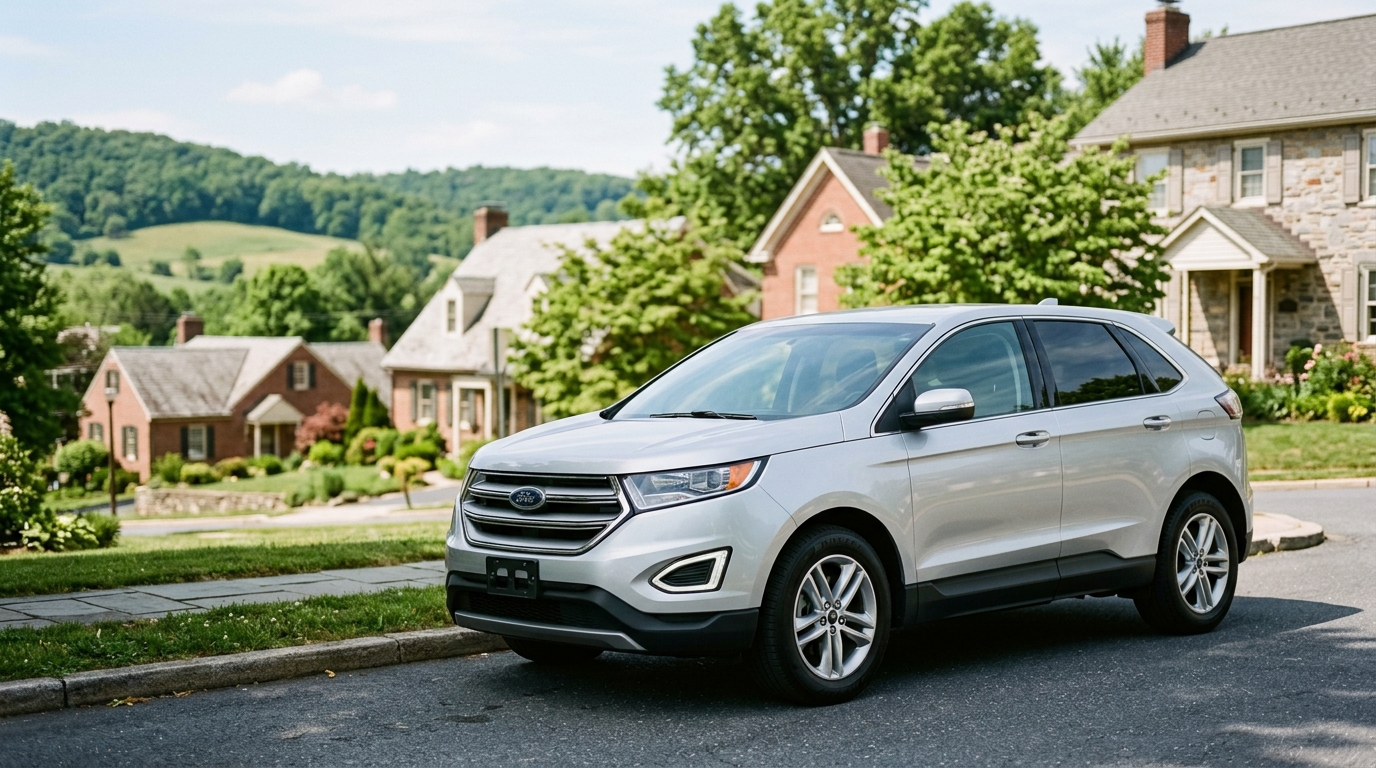
Expanding your used vehicle search radius to 50 miles encompasses regional inventories across south-central Pennsylvania and northern Maryland, giving you access to a broader selection of models, trims, and price points without requiring excessive travel. Looking beyond your immediate neighborhood helps you compare options and identify true market value.
Setting an overly tight geographic filter limits your options and may force you to compromise on vehicle condition, color, or equipment. Expanding your search along major transit routes like the I-81 corridor near Hagerstown opens up high-volume dealer inventories and diverse vehicle choices while keeping test drives within an easy hour’s drive.
Comparing multiple listings across an expanded market radius offers several distinct advantages:
- Preventing Emotional Decisions: Evaluating three or four similar vehicles prevents you from overpaying for a single listing out of convenience.
- Identifying Regional Price Benchmarks: Viewing multiple listings reveals the average local price for specific mileage brackets and trim packages.
- Equipment Optimization: Expanding your search increases the likelihood of finding key driver-assist technologies such as automatic emergency braking, forward collision warning, blind-spot monitoring, lane-keeping assist, and rear cross-traffic alert.
- Leverage During Purchase: Knowing what comparable models sell for within 50 miles gives you concrete data when evaluating final vehicle pricing.
Comparing listings side-by-side ensures that you select a vehicle meeting your exact performance, safety, and budget criteria. You can explore our pre-owned vehicle selection online to analyze detailed specifications and history reports before taking a test drive.
Common Questions About Optimizing Used Car Searches
Q: What state documentation is required when completing a pre-owned car purchase in Pennsylvania?
Buyers must submit the signed vehicle title, a completed Form MV-4ST Vehicle Sales and Use Tax Return/Application for Registration, proof of valid Pennsylvania auto insurance, an odometer disclosure statement, and payment for title and registration fees to PennDOT or an authorized agent within 20 days of purchase.
Q: How does financing a used car affect the baseline DMV registration fees in Pennsylvania?
Financing a pre-owned vehicle requires recording a lien with PennDOT, which incurs an additional $36 lien recording fee on top of the standard $72 title fee and $48 registration fee, bringing baseline state administrative fees to $156 before applying the 6% state sales tax.
Q: Which driver-assist safety features provide the greatest benefit on pre-owned models?
When evaluating pre-owned vehicles, prioritize safety features recommended by NHTSA, including automatic emergency braking, forward collision warning, blind-spot monitoring, lane-keeping assist, and rear cross-traffic alert, as these active collision-intervention technologies significantly reduce crash risks during daily driving.
Q: Can buyers still claim federal EV tax credits when purchasing a used electric vehicle today?
Federal clean vehicle tax credits under IRC §25E, §30D, and §45W were terminated by Public Law 119-21 for vehicles acquired after September 30, 2025. Unless you acquired the vehicle on or before September 30, 2025 under a binding written agreement, present-day pre-owned EV purchases do not qualify for federal tax credits.
Q: How can shoppers confirm that a used vehicle has no unaddressed safety recalls before buying?
Buyers can enter the 17-character Vehicle Identification Number (VIN) into the official NHTSA recall lookup tool or request an updated vehicle history report from the seller to verify that all open safety campaigns have been resolved by an authorized dealer.
For personalized assistance with vehicle selection, trade-in valuations, or scheduling a pre-purchase test drive, visit our dealership location on East Main Street or reach our sales team directly at (833) 669-0849 today.
Keep Your Vehicle Running Strong
Keep your vehicle performing at its best with our service team:

0 comment(s) so far on What Should You Check Before Buying a Used Car?